Sapiens · Weight · GLP-1
Mounjaro in India: What It Costs, What It Does, and Who It’s Actually For
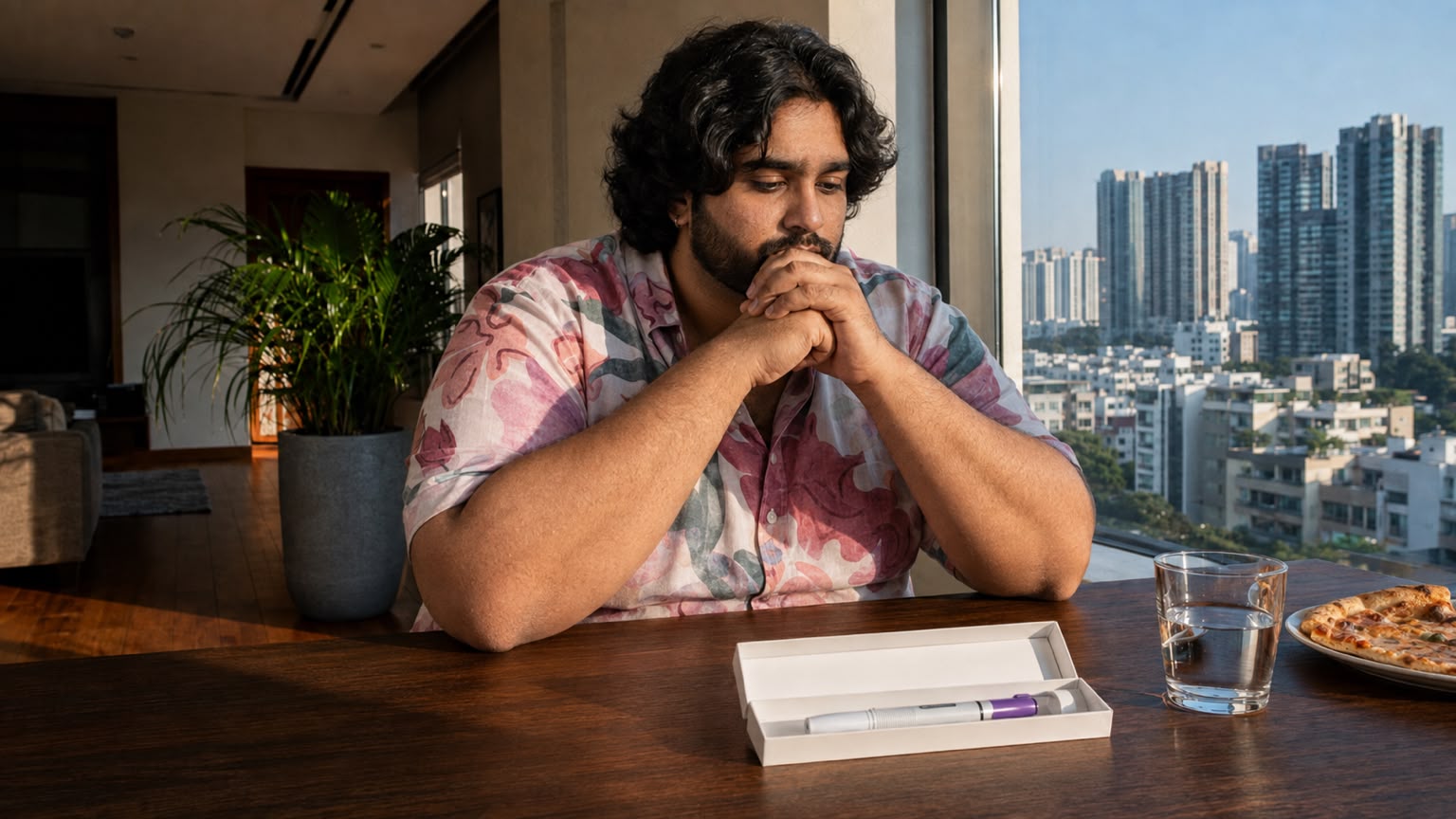
Mounjaro is the most effective weight-loss injection available in India, and as of August 2026 it is also the most expensive by a wide margin. In March, semaglutide came off patent here and generics arrived at a fraction of the price. That did not make Mounjaro worse. It made the question different: the choice is no longer which drug works best, but what the extra weight loss buys you at roughly ten to twenty times the cost of the cheapest generic semaglutide.
Quick facts
- Mounjaro is the brand name for tirzepatide, a once-weekly injection from Eli Lilly. Cipla co-markets it in India as Yurpeak.
- It launched in India in March 2025 as vials, with the KwikPen following in August 2025. By October 2025 it was India's top-selling drug by value, at about ₹100 crore for the month.1
- In August 2026 it sells for roughly ₹13,125 a month at the 2.5 mg starting dose and ₹25,781 at 15 mg. Vials cost less per dose than the pen.
- In the SURMOUNT-1 trial, average weight loss at 72 weeks was 15.0% at 5 mg, 19.5% at 10 mg and 20.9% at 15 mg, against 3.1% on placebo.
- The 22.5% figure widely quoted comes from a second analysis counting only people who stayed on treatment.
- Semaglutide's Indian patent expired on 20 March 2026. Generic versions followed within days, the cheapest starting at ₹1,290 a month.
- There is no generic tirzepatide in India, and none is imminent.
- It is a Schedule H prescription medicine. It is not for cosmetic weight loss.
What is Mounjaro, and how is it different? Copy link
Mounjaro is tirzepatide, a once-weekly injection that acts on two gut hormone receptors where the older drugs act on one. Semaglutide, the molecule in Ozempic and Wegovy, mimics GLP-1. Tirzepatide mimics GLP-1 and GIP together. That dual action is the reason it produces more weight loss on average in trials than anything else currently licensed.
The mechanism is the same broad idea as the rest of the class: appetite falls, the stomach empties more slowly, and blood sugar handling improves. You eat less because eating stops being interesting. Most people describe it as an absence of interest. It isn't insulin, and it isn't a stimulant fat burner.
Two names cause confusion. In India the same molecule is sold by Eli Lilly as Mounjaro and co-marketed by Cipla as Yurpeak — same drug, same dosing. Elsewhere, tirzepatide for obesity is branded Zepbound; in India the obesity and diabetes indications both sit under the Mounjaro name.
Mounjaro price in India, by dose Copy link
Mounjaro is priced by dose strength, so the monthly cost climbs as you titrate up. It comes in two formats: single-dose vials, which need a separate syringe, and the pre-filled KwikPen. Per dose the vial works out cheaper.
| Dose | KwikPen, per month | Vial, per weekly dose |
|---|---|---|
| 2.5 mg (starting) | ₹13,125 | ₹3,281 |
| 5 mg | ₹16,406 | ₹4,101 |
| 7.5 mg | ₹20,625 | — |
| 10 mg | ₹20,625 | — |
| 12.5 mg | ₹25,781 | — |
| 15 mg | ₹25,781 | — |
A person settling at 5 mg spends around ₹16,400 a month on the drug alone. At 10 mg it is closer to ₹20,600. Those figures exclude the consultation, the baseline blood tests, needles if you are using vials, and the protein and gym costs that make the difference between losing fat and losing muscle. Budgeting only for the box is the most common planning mistake.
Mounjaro is prescription-only, so it should be dispensed against a valid prescription. Buy through a regulated pharmacy: counterfeit tirzepatide pens have been reported in several markets, and a pen bought outside that chain carries no guarantee of what is in it or how it has been stored.
Why quoted prices vary so much
Quoted monthly figures for the same drug range from roughly ₹13,000 to ₹70,000, because they measure different things. A pharmacy price covers the medicine. A clinic or programme price bundles consultation, follow-ups and sometimes nutrition support into one monthly number, which is a reasonable way to sell care and not comparable to a shelf price. And a per-pen figure is not a per-dose figure: each KwikPen holds four weekly doses, so a pen price read as one dose looks four times worse than it is.
Ask three questions before you compare anything. Does the number include the consultation? Is it the pen or the vial? And is it a month or a single dose?
Storage and getting hold of it
Store unused pens in the fridge at 2–8°C, in the original carton, away from light, and never frozen. Once a pen is in use there is a permitted room-temperature window — for the KwikPen, up to 30°C for as long as 30 days, after which it is discarded.3 Follow the limits in the leaflet that came with your product, and do not exceed the stated temperature or time. If you order online, confirm cold-chain delivery before you pay.
Supply is reliable in metros through retail chains, hospital pharmacies and prescription-verifying online pharmacies. It thins out in smaller cities, which is worth planning around if you are starting a course that needs an uninterrupted supply.
What changed in March 2026 Copy link
For most of Mounjaro's time in India, the fair comparison was against branded semaglutide, and the price difference was real without being decisive. That ended on 20 March 2026, when semaglutide's core Indian patents expired.4
What followed was fast. In the launch week Reuters counted at least half a dozen manufacturers, Dr Reddy's, Zydus and Sun Pharma among them, selling brands up to 70% below Novo Nordisk's prices. Natco was first out at ₹1,290 a month for a multi-dose vial, which it put at roughly 90% below the originator. By mid-2026 dozens of generic brands were in circulation.4 Eleven days later Novo Nordisk cut its own prices for the second time: the starting dose of Ozempic by up to 36% and of Wegovy by up to 48%, with average reductions across all doses of 23.8% and 27% respectively. Ozempic's 0.25 mg dose went to ₹1,415 a week.5
Tirzepatide against semaglutide, head to head
Frankly, the evidence here moved only recently. Until 2025 the comparison rested on reading across separate trials, which is a weak way to compare two drugs. SURMOUNT-5 tested them directly: 751 adults with obesity and without diabetes, randomised to the maximum tolerated dose of tirzepatide (10 or 15 mg) or semaglutide (1.7 or 2.4 mg) for 72 weeks.6
Tirzepatide reduced body weight by 20.2% against semaglutide's 13.7%. On a mean starting weight of 113 kg that is about 22.8 kg against 15.0 kg. More people on tirzepatide reached every threshold measured, including a 25% reduction: 31.6% against 16.1%. Discontinuation because of gut side effects went the other way, and was lower on tirzepatide (2.7%) than on semaglutide (5.6%).
Two things to hold alongside that. The trial was open-label, so everyone knew which drug they were taking, and it was funded by tirzepatide's manufacturer. It also compared branded semaglutide, at a time when the Indian price of semaglutide had not yet collapsed. The efficacy finding stands. The value judgement it feeds has moved since.
So does that make Mounjaro the wrong choice now? Not quite. Tirzepatide was untouched by any of this, because it is a different molecule under separate patent protection. There is no generic tirzepatide in India and none imminent. Estimates of when one becomes possible vary widely depending on jurisdiction and on which patents in the thicket you count, so any single year is better read as an estimate than a date.
The decision has changed shape. In February, choosing between tirzepatide and semaglutide was mostly a clinical conversation with a moderate cost difference attached. Now it is a clinical conversation with a cost difference of roughly ten to twenty times against the cheapest generic semaglutide, and that is a different conversation. More weight loss on average is a real advantage. Whether it justifies that multiple depends on how much weight you actually need to lose, what else is going on with your health, and for how long you can sustain the spend — because what shapes the outcome is not the drug you start on, but the one you are still comfortably taking a year in.
How much weight do people actually lose? Copy link
The evidence comes from SURMOUNT-1, which randomised 2,539 adults with obesity and without diabetes to tirzepatide or placebo for 72 weeks. Mean starting weight was 104.8 kg and mean BMI was 38.7
At 72 weeks, average weight change was 15.0% at 5 mg, 19.5% at 10 mg and 20.9% at 15 mg, against 3.1% on placebo. Those figures use the treatment-regimen estimand, which counts everyone who was randomised whether or not they stayed on the drug — the more conservative and more realistic of the two analyses reported.7
You will more often see 22.5% quoted, including in Eli Lilly's own headline. That figure counts only the people who stayed on the drug. The numbers above count everyone who started, including those who stopped. Both are in the paper and both are honest. If you are deciding whether to begin, the second set is the one that describes your odds.
The proportion reaching particular thresholds shows the spread, which an average hides. On the efficacy estimand — the same analysis that produces the 22.5% headline, so read it as the optimistic end — 91% of people on 15 mg lost at least 5% of body weight and 63% lost at least 20%; at 5 mg it was 85% and 32%.8 Nine in ten lost weight. A minority lost a great deal.
| Starting weight | 10% lost | 15% lost | 20% lost |
|---|---|---|---|
| 70 kg | 7 kg | 10.5 kg | 14 kg |
| 80 kg | 8 kg | 12 kg | 16 kg |
| 100 kg | 10 kg | 15 kg | 20 kg |
| 120 kg | 12 kg | 18 kg | 24 kg |
Two caveats on reading across from the trial to yourself. Participants averaged 104.8 kg at baseline, which is heavier than most Indian adults starting treatment, and percentages behave differently at lower starting weights. And trial participants received structured lifestyle support throughout; real-world loss is typically lower than trial loss for exactly that reason.
The early kilograms also count for more than the later ones, clinically. Visceral fat, the kind packed around the organs, falls disproportionately early, and that is the fat that drives insulin resistance, fatty liver and cardiovascular risk. Blood sugar and liver markers often improve well before anyone reaches a goal weight. In SURMOUNT-1, 95.3% of participants who had prediabetes at the start had normal glucose at 72 weeks. So did 61.9% on placebo, which means the drug accounts for the gap between those two figures, not the whole of the first.7
When does it start working? Copy link
Most of us expect a medicine to announce itself. This one does not. Appetite usually changes first, often within the first week or two, and the change is more a quiet absence of interest in food than a dramatic loss of hunger. People describe forgetting to finish a plate, or losing interest in a snack halfway through.
Weight follows more slowly. The trial used a 20-week dose-escalation period before reaching the maintenance dose, so the steepest part of the curve is months two to nine rather than week one. Expecting a visible change in the first fortnight is the fastest route to disappointment and to abandoning treatment before it has had a chance to work.
How Mounjaro is dosed Copy link
It starts at 2.5 mg once weekly for four weeks. That is an initiation dose rather than a maintenance dose, intended to ease the body into treatment. After that the dose steps up in 2.5 mg increments no more often than every four weeks, as tolerated, with 5, 10 and 15 mg the recommended maintenance doses.
As you would expect, the trouble almost always shows up on the way up. The slow climb is the whole technique. Gastrointestinal effects are most common during dose escalation, in SURMOUNT-1 and in the head-to-head trial alike. If symptoms are significant, the next increase may need to be delayed, or the plan reassessed with the prescribing doctor. In SURMOUNT-1, between 4.3% and 7.1% of participants stopped because of adverse events, against 2.6% on placebo.7
The maximum dose is not a target. Dose is individualised according to response and tolerability, and a lower maintenance dose you tolerate and can afford may serve you better than the highest one you can technically reach. Worth raising as a question, since the ladder does not have to be climbed to the top.
Who it is for, and who it is not for Copy link
Tirzepatide is licensed for weight management in adults with a BMI of 30 or above, or 27 or above alongside a weight-related condition such as hypertension, dyslipidaemia, obstructive sleep apnoea, prediabetes or type 2 diabetes.9 Those numbers come from European and American populations, and India does not use them to define obesity.
What counts as obesity in India
Indian consensus guidance has used lower cut-offs since 2009, because the same BMI means something different here:
| Category | Asian Indian | International |
|---|---|---|
| Normal | 18.0 – 22.9 | 18.5 – 24.9 |
| Overweight | 23.0 – 24.9 | 25.0 – 29.9 |
| Obesity | ≥ 25 | ≥ 30 |
| Abdominal obesity, men | waist > 90 cm | > 102 cm |
| Abdominal obesity, women | waist > 80 cm | > 88 cm |
In 2025 an Indian expert panel went further and restaged the whole definition. Stage 1 obesity is a BMI above 23 with no effect yet on organ function or daily activity. Stage 2 requires a BMI above 23 plus excess waist circumference or waist-to-height ratio, together with a related condition or a functional limitation.10 The shift is away from weight alone and towards where the fat sits and what it is doing.
Why the same BMI means something different here
The phrase people use is thin-outside-fat-inside, and it is a fair description. At any given BMI, South Asians tend to carry more body fat and less muscle than Europeans, and more of that fat sits deep in the abdomen, around the liver, pancreas and intestines, where you cannot see or pinch it. Visceral fat is the metabolically active kind, and it drives insulin resistance, fatty liver and cardiovascular risk far more than the fat you can pinch.
A man at 78 kg with a 96 cm waist and a normal-looking BMI can be well into metabolic trouble, while the same BMI in a European might not be. It is why diabetes appears a decade earlier here on average, and why a waist tape is often more informative than the scale.
None of that automatically lowers the threshold for prescribing a drug — licensing and clinical judgement are separate questions, and the licensed criteria are what they are. It does mean the assessment belongs against Indian thresholds and a waist measurement, using a chart drawn up for this population. And it is not licensed, or appropriate, for cosmetic weight loss in someone whose weight is not a medical problem.
When it should not be used
These fall into three groups, and the distinction matters:
Contraindicated. A personal or family history of medullary thyroid carcinoma, or MEN2 syndrome, based on thyroid C-cell tumours seen in rodents with this drug class. Also a previous serious hypersensitivity reaction to tirzepatide or to any component of the formulation.
Not indicated. Type 1 diabetes, where it does not substitute for insulin. Pregnancy, or while trying to conceive: tirzepatide should be stopped at least one month before a planned pregnancy, because of the drug's long half-life.3 And cosmetic weight loss in someone whose weight is not a medical problem.
Requires assessment first. A history of pancreatitis, gallbladder disease, significant kidney or liver disease, and diabetic retinopathy. Severe gastroparesis is not recommended, and other active gastrointestinal disease needs individual judgement.
Two interactions are easy to miss. If you also take insulin or a sulfonylurea, the risk of hypoglycaemia rises and those doses often need reducing when tirzepatide starts, which is relevant in India where type 2 diabetes is the more common reason for the prescription. And slowed stomach emptying can reduce absorption of oral contraceptives, so an additional method is commonly advised for four weeks after starting and for four weeks after each dose increase. Ask; do not assume.
Side effects, and the two that matter most in India Copy link
The common effects are gastrointestinal — nausea, constipation, diarrhoea, reflux. They are worst in the days after a dose increase and settle as the body adapts. Most are manageable with dose pacing, smaller meals, and enough water. The management is much the same across this whole drug class.
Two deserve more attention than they usually get here.
Muscle loss. Any rapid weight loss takes lean tissue along with fat, and a substantial share of the total lost can be lean mass without deliberate effort to prevent it. That matters more in India than the trials suggest, because average protein intake is low, resistance training is uncommon, and sarcopenia risk is already elevated in South Asian populations at a given BMI. The countermeasures are unglamorous and effective: adequate protein spread across the day, and resistance training twice a week from the very start.
Hair shedding. Losing a lot of weight quickly is a recognised trigger for telogen effluvium, a diffuse shed that starts two to three months after the trigger and recovers on its own. It is frightening and it is temporary. It is worth knowing how to tell it from the kind that does not grow back.
The serious but uncommon problems to know by name are pancreatitis, gallbladder disease, and severe dehydration from persistent vomiting. Each has a clear signal, listed under when to see a doctor below.
Tests to have before you start Copy link
Nobody enjoys this part, and it is the part people skip. A baseline is not bureaucracy. It tells you whether the weight is the whole story, gives you something to compare against later, and occasionally changes the plan entirely — an underactive thyroid found before starting is a very different situation from one found six frustrating months in.
| Test | Why it is on the list |
|---|---|
| HbA1c | Establishes whether you have diabetes or prediabetes, which changes both the target and the monitoring |
| Lipid profile | Assesses cardiometabolic risk. Very high triglycerides are independently associated with pancreatitis risk, and they respond early to treatment |
| Kidney function | The baseline you will want if vomiting or dehydration ever becomes an issue |
| Liver function | Fatty liver is common alongside obesity in India and often improves with weight loss |
| Thyroid function | Rules out a treatable cause of weight gain before attributing it all to lifestyle |
If the thyroid does come back abnormal, treating it helps, but it rarely explains as much of the weight as people hope — usually a few kilograms, seldom thirty.
What happens when you stop Copy link
Substantial weight regain is common after stopping. This is the least popular fact about the entire drug class and the most important one to grasp before starting, because it decides whether treatment is a project with an end date or an ongoing management decision.
SURMOUNT-4 measured it, and the numbers are worth sitting with. Participants took tirzepatide openly for 36 weeks and lost 20.9% on average, then were randomly assigned either to continue or to switch to placebo for another year. Those who continued lost a further 5.5%. Those switched to placebo regained 14.0%. By the end, 89.5% of the continuing group had held at least four-fifths of what they had lost, against 16.6% of the placebo group.11
Note what that does not say. The placebo group did not end up back where they started; they finished about 9.9% below their original weight. Stopping undoes much of the result, not all of it.
Obesity behaves like a chronic condition: the physiology that defended the higher weight is still there, and removing the drug removes the counterweight. That is not a failure of willpower any more than blood pressure rising after stopping an antihypertensive is a failure of willpower.
What follows from that is practical. Decide before you start whether you are treating for a defined period with a maintenance plan afterwards, or treating indefinitely. Build the muscle and the eating pattern during treatment. Those are what carry the result afterwards. And be straight with yourself about the ongoing cost: a drug you can afford for eight months and then stop may leave you close to where you began.
When to see a doctor Copy link
Before starting, for eligibility, a baseline and a plan for what happens after.
During treatment, seek assessment promptly for severe abdominal pain, particularly pain that bores through to the back and comes with vomiting, which is the pattern of pancreatitis. Also for persistent vomiting or an inability to keep fluids down, yellowing of the eyes or skin, pain under the right ribs after fatty meals, or signs of dehydration such as passing very little urine.
Dose changes should always be doctor-led. If side effects are making the current dose intolerable, the answer is usually to hold the dose, and that decision needs someone who knows your history.
Frequently asked questions Copy link
What is the price of Mounjaro in India?
In August 2026, Indian online pharmacies were selling the KwikPen at roughly ₹13,125 a month for the 2.5 mg starting dose, rising to about ₹25,781 at 12.5 mg and 15 mg. Single-dose vials work out cheaper, near ₹3,281 and ₹4,101 for the 2.5 mg and 5 mg weekly doses. Those are selling prices, so they sit below the manufacturer's MRP; hospital pharmacies usually charge closer to it. Ask which format is being quoted and whether the figure covers a month or a single dose, because the two get confused routinely.
How much weight can you lose on Mounjaro?
In SURMOUNT-1, average weight loss at 72 weeks was 15.0% at the 5 mg dose, 19.5% at 10 mg and 20.9% at 15 mg, against 3.1% on placebo, counting everyone randomised. The 22.5% figure often quoted comes from a second analysis counting only those who stayed on treatment. Real-world loss is typically lower than trial loss, and individual results vary substantially.
Is Mounjaro better than Ozempic?
It produces more weight loss. In SURMOUNT-5, the first trial to test the two directly, tirzepatide reduced weight by 20.2% against semaglutide's 13.7% over 72 weeks, though that trial was open-label and funded by tirzepatide's manufacturer. Whether more weight loss makes it the better choice for you is a separate question, especially in India since March 2026, when semaglutide came off patent and generic versions became available at a fraction of Mounjaro's price. More effective and better value are not the same thing, and the right answer depends on how much weight you need to lose, your other conditions, and what you can sustain.
Is there a generic Mounjaro in India?
No. Tirzepatide remains under patent in India and no generic version is available. Generic semaglutide, a different molecule, became available in March 2026 after its Indian patent expired. Estimates of when generic tirzepatide might arrive vary considerably by jurisdiction and by which patents are counted, so any single year should be read as an estimate.
Is Mounjaro the same as Yurpeak?
Yes. Yurpeak is the brand under which Cipla co-markets tirzepatide in India through an arrangement with Eli Lilly. It is the same molecule at the same doses. Elsewhere tirzepatide for obesity is sold as Zepbound; in India both indications sit under the Mounjaro name.
Do you need a prescription for Mounjaro in India?
Yes. Mounjaro is a Schedule H prescription medicine and should be dispensed against a valid prescription from a registered doctor. Buy through a regulated pharmacy: counterfeit tirzepatide pens have been reported in several markets, and cold-chain handling matters, so a pen obtained outside that chain offers no guarantee of what is in it or how it was stored.
What is the maximum dose of Mounjaro?
15 mg once weekly. Treatment starts at 2.5 mg for four weeks and steps up in 2.5 mg increments no more often than every four weeks, as tolerated. The maximum is not a target. Dose is individualised to response and tolerability, and a lower maintenance dose you tolerate may serve you better than the highest one you can technically reach.
Does Mounjaro cause muscle loss?
Rapid weight loss of any kind takes lean tissue as well as fat, and a meaningful share of what is lost can be muscle without deliberate steps to prevent it. This matters particularly in India, where protein intake is often low and resistance training uncommon. Adequate protein spread through the day and resistance training twice a week from the start are the countermeasures.
What happens if you stop taking Mounjaro?
Substantial regain is common. In SURMOUNT-4, participants who lost 20.9% over 36 weeks and then switched to placebo regained 14.0% over the following year, while those who continued lost a further 5.5%. By the end, 89.5% of the continuing group had held at least four-fifths of their loss, against 16.6% of the placebo group. The placebo group did not return to baseline, finishing about 9.9% below their starting weight. Agree a maintenance plan before you begin, and count the ongoing cost as part of the decision.
What BMI is considered obese in India?
Indian consensus guidance uses lower thresholds than the international ones: overweight from a BMI of 23, obesity from 25, and abdominal obesity at a waist above 90 cm in men or 80 cm in women. The international figures are 25 and 30. In 2025 an Indian expert panel restaged the definition again, calling BMI above 23 with no organ or functional effect Stage 1, and BMI above 23 plus an excess waist measurement and a related condition Stage 2. The reason is body composition: at the same BMI, South Asians carry more fat, and more of it sits around the organs. These thresholds define obesity for diagnosis; the licensed criteria for prescribing tirzepatide are separate.
Can you take Mounjaro without diabetes?
Yes. It is licensed for weight management in adults with a BMI of 30 or above, or 27 or above alongside a weight-related condition such as hypertension, dyslipidaemia, sleep apnoea or prediabetes. SURMOUNT-1, the main obesity trial, specifically studied adults without diabetes.
References Copy link
- Lilly's obesity drug Mounjaro becomes India's top-selling drug by value in October. Reuters, 7 November 2025, citing Pharmarack — Mounjaro recorded ₹100 crore (about US$11.38 million) in October 2025 sales, the highest of any brand by value in the Indian Pharmaceutical Market that month, ahead of Augmentin at roughly ₹80 crore. Cumulative revenue since the March 2025 launch reached ₹333 crore, and volume was reported at ten times that of Wegovy. Sales-audit data from a commercial tracking firm rather than an official register; a single month's ranking by value, driven partly by a high unit price against high-volume low-cost brands. Business Standard report
- Eli Lilly launches weight-loss drug Mounjaro in India. Reuters, March 2025; and India gets first weight-loss drug as Eli Lilly launches Mounjaro. Bloomberg, March 2025 — both reported the vial launch, with Lilly confirming ₹3,500 for the 2.5 mg vial and ₹4,375 for 5 mg directly to both. The KwikPen came later, in August 2025, with the 2.5 mg month reported at ₹14,000. These are manufacturer launch prices, which are not pharmacy selling prices and have since been superseded; they appear here only as a reference point for the current figures.
- Eli Lilly and Company. Mounjaro (tirzepatide) product monograph, and the European Medicines Agency summary of product characteristics for Mounjaro — the source for dosing, storage and pregnancy instructions used here. Initiation is 2.5 mg once weekly for four weeks, an initiation rather than a maintenance dose, with 5, 10 and 15 mg the recommended maintenance doses and increments of 2.5 mg no more often than every four weeks. Contraindicated in previous hypersensitivity to tirzepatide or any excipient. Where a patient wishes to become pregnant it should be discontinued at least one month before a planned pregnancy, because of the drug's long half-life. Where it is combined with a sulfonylurea or insulin, self-monitoring of blood glucose may be needed and the dose of those agents reduced to limit hypoglycaemia. Store at 2–8°C in the original carton, protected from light, not frozen; an in-use KwikPen may be kept at room temperature not above 30°C for up to 30 days and is then discarded. Labelling differs between regulators, so the leaflet supplied with the product bought in India governs. Lilly product monograph
- Novo Nordisk cuts prices of Ozempic and Wegovy in India again to fend off generics competition. Reuters, 31 March 2026; Business Today, 31 March 2026; and Factbox: Indian drugmakers flood market with cheaper versions of Novo's Ozempic and Wegovy. Reuters, March 2026 — semaglutide's core Indian patents expired on 20 March 2026 per filings with the National Pharmaceutical Pricing Authority. In the launch week Reuters counted at least half a dozen manufacturers selling brands up to 70% below Novo's prices, Dr Reddy's, Zydus and Sun Pharma among them. Natco launched first, in multi-dose vials at ₹1,290 a month, which the company placed at roughly 70% below pen formats and 90% below the originator; Eris matched that figure. Brand counts reported afterwards run into the dozens, and vary by source and by whether launched or merely approved products are counted. Prices in a newly opened generic market move quickly and differ by manufacturer, format and channel.
- Novo Nordisk India price revision, 31 March 2026, as reported by Reuters and Bloomberg — starting doses of Ozempic reduced by up to 36% and Wegovy by up to 48%; average reduction across all doses 23.8% for Ozempic and 27% for Wegovy; the 0.25 mg dose of both priced at ₹1,415 for a weekly shot. This was Novo's second cut, following a reduction of up to 37% on Wegovy in November 2025. Company-announced list prices; what a patient pays at a given pharmacy may differ.
- Aronne LJ, Horn DB, le Roux CW, et al.; SURMOUNT-5 Trial Investigators. Tirzepatide as compared with semaglutide for the treatment of obesity. New England Journal of Medicine. 2025;393(1):26–36 — the first head-to-head trial of the two molecules. 751 adults with obesity and without diabetes, randomised 1:1 to maximum tolerated tirzepatide (10 or 15 mg) or semaglutide (1.7 or 2.4 mg) for 72 weeks, with behavioural support. Mean baseline weight 113 kg, BMI 39.4. Weight change −20.2% with tirzepatide against −13.7% with semaglutide; 31.6% against 16.1% reached a 25% reduction. Discontinuation for gastrointestinal events was lower on tirzepatide (2.7%) than semaglutide (5.6%). Open-label, so participants and investigators knew the assignment, and funded by Eli Lilly, tirzepatide's manufacturer. 76% of participants were White and 35% men, and the authors note weight loss ran about 6 percentage points lower in men in both arms. PMID 40353578 · NCT05822830
- Jastreboff AM, Aronne LJ, Ahmad NN, et al.; SURMOUNT-1 Investigators. Tirzepatide once weekly for the treatment of obesity. New England Journal of Medicine. 2022;387(3):205–216 — 2,539 adults with obesity, or overweight with at least one weight-related complication, and without diabetes, randomised to tirzepatide 5 mg, 10 mg, 15 mg or placebo for 72 weeks including a 20-week escalation. Mean baseline weight 104.8 kg, BMI 38.0. Mean percentage weight change at week 72 on the treatment-regimen estimand: −15.0% (95% CI −15.9 to −14.2), −19.5% (−20.4 to −18.5), −20.9% (−21.8 to −19.9), versus −3.1% (−4.3 to −1.9). Discontinuation for adverse events 4.3%, 7.1% and 6.2% versus 2.6%. 95.3% of participants with baseline prediabetes were normoglycaemic at 72 weeks. Participants were 70.6% White and 67.5% female with mean age 44.9, so direct transfer to Indian patients is an assumption rather than a finding; all participants received lifestyle counselling. PMID 35658024 · NEJM full text
- Eli Lilly and Company. SURMOUNT-1 results published in the New England Journal of Medicine show tirzepatide achieved between 16.0% and 22.5% weight loss in adults with obesity or overweight. Company press release, 4 June 2022 — source of the widely circulated 22.5% figure, which is the efficacy estimand (participants remaining on treatment) rather than the treatment-regimen estimand reported as the co-primary result. Threshold data on the efficacy estimand: ≥20% weight reduction in 32% (5 mg), 55% (10 mg) and 63% (15 mg) versus 1.3% on placebo; ≥5% in 85%, 89% and 91% versus 35%. A manufacturer communication about its own product, and the 5 mg threshold figures were not controlled for type 1 error.
- Tirzepatide summary of product characteristics, as reflected in regulatory approvals for weight management — indicated as an adjunct to a reduced-calorie diet and increased physical activity in adults with an initial BMI of ≥30 kg/m², or ≥27 to <30 kg/m² with at least one weight-related comorbidity such as hypertension, dyslipidaemia, obstructive sleep apnoea, cardiovascular disease, prediabetes or type 2 diabetes. Thresholds derive from predominantly European and North American populations; South Asian bodies generally define obesity at lower BMI cut-offs, and whether prescribing thresholds should shift accordingly is a matter of clinical judgement rather than settled guidance.
- Misra A, Vikram NK, Ghosh A, Ranjan P, Gulati S; India Obesity Commission. Revised definition of obesity in Asian Indians living in India. Diabetes & Metabolic Syndrome: Clinical Research & Reviews. 2025;19(1):102989 — a Delphi consensus across five expert rounds, replacing India's 2009 BMI-only definition. Stage 1 obesity is increased adiposity with BMI above 23 kg/m² and no discernible effect on organ function or daily activities. Stage 2 requires BMI above 23 plus excess waist circumference or waist-to-height ratio, together with at least one comorbidity or a functional limitation. The earlier 2009 consensus thresholds (overweight 23.0–24.9, obesity above 25, waist above 90 cm in men and 80 cm in women) remain in wide clinical use. Expert consensus rather than trial evidence, and adoption across Indian practice is uneven; it defines obesity for diagnosis, not eligibility for any particular medicine. PMID 39814628 · journal record
- Aronne LJ, Sattar N, Horn DB, et al.; SURMOUNT-4 Investigators. Continued treatment with tirzepatide for maintenance of weight reduction in adults with obesity: the SURMOUNT-4 randomized clinical trial. JAMA. 2024;331(1):38–48 — randomised withdrawal design. 670 participants completed a 36-week open-label tirzepatide lead-in, losing a mean 20.9%, then were randomised to continue or switch to placebo for 52 weeks. Weight change from week 36 to 88 was −5.5% on tirzepatide against +14.0% on placebo (difference −19.4%, 95% CI −21.2 to −17.7). 89.5% on tirzepatide maintained at least 80% of lead-in weight loss against 16.6% on placebo. Overall change from week 0 to 88 was −25.3% and −9.9% respectively. A withdrawal design tests what happens when treatment stops, not how long anyone should stay on it, and the lead-in selected for people who tolerated the drug. PMID 38078870
This article is for general information and is not a substitute for individual medical advice. Mounjaro is a prescription-only medicine and should be started, adjusted and stopped only under the supervision of a registered medical practitioner who has assessed your history, examination and baseline tests. Prices are market examples reviewed in August 2026 and change frequently.