Labs & Reports · Fever & infection
Typhoid Test: Widal, Typhidot or Blood Culture, and Which One Confirms It
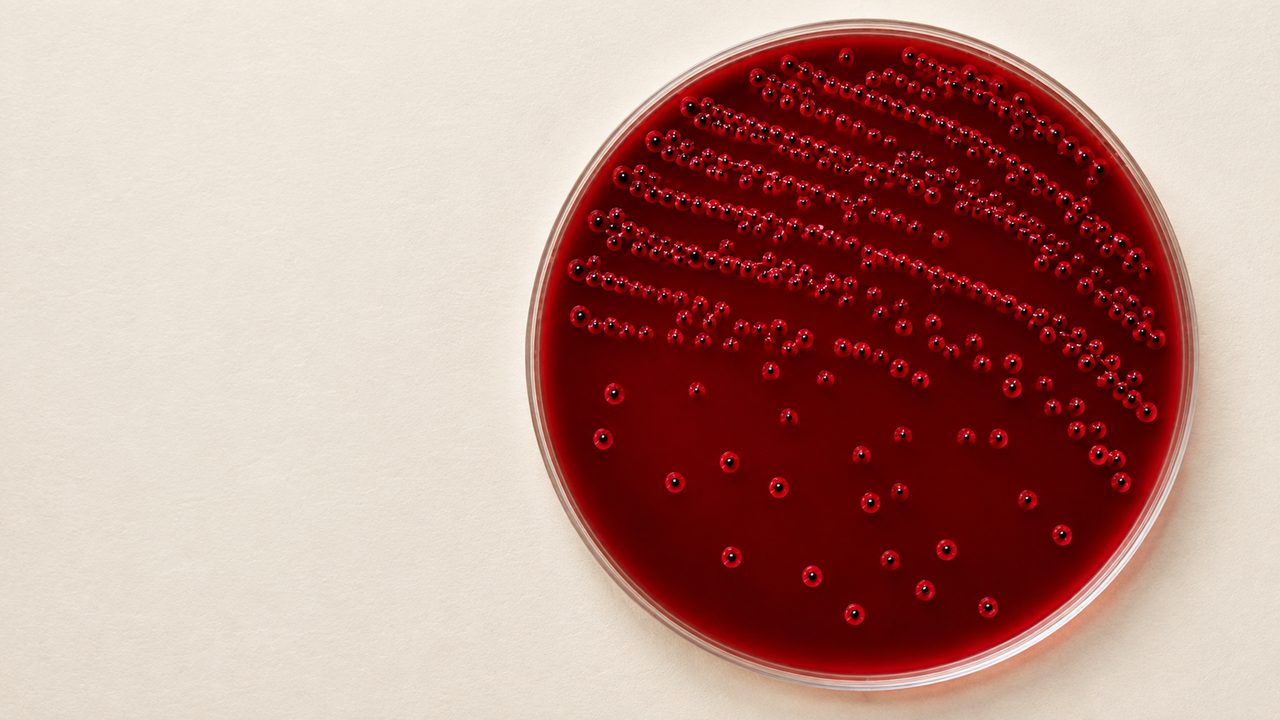
A blood culture is the preferred typhoid test, and it should ideally be drawn before antibiotics, especially in the first week. Among the routine tests it is the one that both confirms the organism and provides antimicrobial-susceptibility testing. Widal and the rapid antibody tests, Typhidot and TUBEX, can produce a result sooner, but their sensitivity and specificity are not good enough to confirm or exclude enteric fever. If you have been offered a "typhoid test" without being told which one, this page tells you what each is called, what it can and cannot say, which day of fever it belongs to, and what it costs.
What tests are used for typhoid, and what does each one look for? Copy link
Enteric fever includes typhoid fever, caused by Salmonella Typhi, and paratyphoid fever, caused by Salmonella Paratyphi. The two are clinically difficult to tell apart, which is another argument for culture: it identifies which organism is actually present. And the fact that the cause is a bacterium organizes every test. Some tests look for the bacterium itself, by growing it from your blood, stool or bone marrow. Others look for your antibodies against it. And a blood count travels alongside; it cannot diagnose typhoid, but it describes how you are doing. Here is what the names on a lab form mean.5
| Name on the form | What it looks for | What a positive means | Report time |
|---|---|---|---|
| Blood culture and sensitivity | Live bacteria grown from your blood; then tested against antibiotics | Confirmed typhoid, plus which antibiotics work | 2 to 7 days |
| Widal test (slide or tube) | Antibodies that clump with killed bacteria; reported as titres such as 1:80 | Suggestive only; needs the day of illness and often a repeat | hours |
| Typhidot / Typhidot-M | IgG and IgM against an S. Typhi outer-membrane protein; Typhidot-M is the modified IgM-only version | Suggestive only; misses paratyphoid | about 1 hour |
| TUBEX TF | A separate IgM test directed against the S. Typhi O9 antigen | Suggestive only | under 1 hour |
| Stool culture | Bacteria shed in stool, mostly from week 2 | Supports the diagnosis; also finds carriers after recovery | 2 to 5 days |
| Bone marrow culture | Bacteria in the marrow, even after antibiotics | The reference standard; used in hard cases only | 2 to 7 days |
| CBC, liver enzymes | Not typhoid tests; the blood count often shows low white cells | Describe the illness; they cannot name the cause | same day |
So the useful question when someone says "get a typhoid test" is which one, because the answer to "do I have typhoid?" and the answer to "which antibiotic?" come from different tests, and only one of them supplies both.
Which typhoid test confirms it? Copy link
The blood culture. Among the routine first-line tests it is the one that both confirms the organism and supplies antimicrobial-susceptibility testing, and every major guideline treats a positive culture as the confirmation with the antibody tests as supporting evidence at best. The US CDC says serologic tests such as the Widal are not recommended because of their high rate of false positives, and that culture is the way to identify the organism.4 The BMJ's 2021 clinical update is blunter: serological tests, including the Widal and the newer rapid cards, are not confirmatory in the acute phase.5 India's pediatric guideline calls blood culture the gold standard and notes that a positive culture "unequivocally" establishes the diagnosis.6
That does not make the culture perfect. Pooled across ten studies that compared it with bone marrow culture, blood culture found 61 percent of true typhoid cases; bone marrow culture found 96 percent.1 A larger 2018 meta-analysis put blood culture at 59 percent overall.2 Read that the way a clinician does, as you would any test with a good specificity and a middling sensitivity. A positive culture is close to certain. A negative culture leaves about four in ten cases undetected, which is why the timing, the volume of blood and your antibiotic history, all covered below, decide how much a negative is worth.
Why does the culture confirm when the antibody tests only suggest? Because it grows the actual organism. A colony of S. Typhi in a bottle is not open to interpretation; a titre or a colored line is. And once the organism is growing, the lab can expose it to a panel of antibiotics and report which ones kill it. In India in 2026 that second half of the report is arguably worth more than the first, for reasons the resistance section explains.
What happens in a blood culture, and how much blood does it need? Copy link
A blood culture is a bottle, and that changes everything about how it is done. The collector cleans the skin carefully, draws blood from a vein, and injects it straight into a bottle of nutrient broth, which goes into an incubator that watches for growth. If bacteria multiply, the lab identifies them, usually by day two or three, and then runs sensitivity testing, which adds another day or two. A final "no growth" report is issued at five to seven days.5,6
Volume matters more than most people are told. In typhoid the number of bacteria circulating is small, often fewer than one per millilitre of blood, so the more blood in the bottle the better the odds of catching one. In the 2018 meta-analysis, sensitivity was 51 percent with a 2 mL sample and 65 percent with 10 mL.2 In adults, adequate blood volume matters: around 8 to 10 mL is commonly targeted for an appropriate culture bottle, depending on the laboratory system in use. Children need less, in proportion to their size, which is why pediatric bottles exist.
Two more things decide the yield. Timing: the culture is most likely to grow in the first week, and its sensitivity is about 31 percent lower after that.2 And antibiotics: a dose or two of anything that touches Salmonella before the draw lowers the yield by about a third, and can turn a positive into a false negative.2 If a doctor wants to start treatment straight away, the right sequence is draw the culture first, then the first dose, in that order, on the same visit. In practice that means one blood-culture draw before the first antibiotic dose, nothing more.
What can the Widal test do, and what can it not? Copy link
The Widal is the oldest test on the list and still the most ordered in India, because it is cheap and fast. It mixes your serum with killed S. Typhi and Paratyphi and watches for clumping, then reports the highest dilution at which clumping still happens, the titre. What it measures is your antibody level. What it cannot tell you is whether live bacteria are in your body now.
Three limits follow from that. First, timing: antibodies take days to build, so the Widal is often negative in the first week, and the Indian pediatric guideline asks for it to be done only after five to seven days of fever, by the tube method.6 India's dengue guideline makes the same point from the other side, warning that a Widal may not turn positive before the second week.9 Second, background: in a country where typhoid is common, many healthy people carry a low titre from past exposure or a past vaccine, so a single "positive" can be nothing. Third, cross-reaction: other infections, malaria and dengue among them, can push the titre up. That is why the CDC and the BMJ do not recommend it for diagnosing acute enteric fever.4,5
Historically, a fourfold rise in Widal titres between paired samples was considered stronger evidence than a single titre. In practice paired serology is rarely useful for an immediate decision, and modern guidance does not treat the Widal as a confirmatory test. If the culture is negative and suspicion remains high, the doctor may repeat blood cultures and reassess for enteric fever and its alternatives rather than treat a titre as confirmation.4,5 What the titres mean, and what 1:80 or 1:160 does and does not tell you, is a page of its own: our Widal test decoder covers the numbers. This page's job is the comparison.
Are Typhidot and Tubex better than the Widal? Copy link
A little, on paper, and not enough to confirm anything. They are separate assays: Typhidot detects IgG and IgM against a specific outer-membrane protein of S. Typhi, Typhidot-M is the modified version that reads IgM alone, and TUBEX TF is an IgM test directed against the O9 antigen. Each gives a result in about an hour. The 2017 Cochrane review pooled 37 studies and found Typhidot, across all its versions, had an average sensitivity of 84 percent and specificity of 79 percent; TUBEX 78 and 87 percent; the Test-It card 69 and 90 percent.3 When the review restricted itself to the Typhidot studies that handled indeterminate results properly, sensitivity fell to 78 percent and specificity to 77 percent.3
Translate that for a fever clinic in September, the kind most of us have sat in. In a thousand feverish patients of whom 300 have typhoid, Typhidot would miss about 66 of them and wrongly label about 161 of the 700 who do not have it.3 The Cochrane authors rated the certainty of the evidence low. That is why the BMJ update calls the rapid cards insufficiently accurate to be useful in diagnosis, and why ICMR, in 2024, invited proposals for a better test on the grounds that Widal, Typhidot, Tubex and Test-It all show suboptimal accuracy.5
One gap is specific enough to name. Typhidot is built on an S. Typhi antigen, so it gives a negative result in paratyphoid, which the Indian pediatric guideline flags directly, and which matters because Paratyphi A causes a meaningful share of enteric fever in India.6 A negative card in a patient who looks like typhoid is not the end of the search.
The three tests side by side Copy link
The line that should stay with you is the middle one. Only the culture reports antibiotic sensitivity. A Widal or a Typhidot, however positive, leaves the doctor guessing which drug to use, and in India guessing has become expensive.
Which typhoid test should you do on which day? Copy link
Week one: blood culture, drawn before any antibiotic. That is the window in which the bacteria are most plentiful in the blood and the antibodies have not yet appeared, so it is also the week in which a Widal or a card is most likely to be falsely negative.2,6 If you are on day two or three and the clinic offers only a Widal, ask for the culture instead, or as well.
From day five to seven: the antibody tests start to mean something, and the pediatric guideline sets that as the earliest sensible day for a Widal.6 A culture is still worth drawing, though its yield is lower than in week one.
Week two and beyond: stool culture becomes useful, because shedding peaks around now, and a blood culture can still grow, especially if no antibiotics have been given, though the odds are falling.2,6 A Widal here is at best supporting evidence, and the CDC notes that more than one culture is often what is actually needed.4
The practical rule, then, is that the day of fever picks the test, exactly as it does for dengue, only with the order reversed. For typhoid the direct test comes first and the antibody tests later. For dengue the antigen window closes quickly and the antibodies take over. Our dengue test page walks through that other clock, and in the monsoon months the two illnesses are tested for together often enough that it helps to hold both in mind.
What if you have already taken antibiotics? Copy link
Tell the lab and the doctor, because it changes how every result is read. A culture drawn after even a short course is about a third less likely to grow, so a negative is weaker evidence.2 Antibody tests are less affected, which is one honest reason a doctor may lean on a Widal pair in a patient who arrived already treated. And in the small number of cases where the diagnosis matters and the blood stays sterile, a bone marrow culture can still grow the organism after antibiotics, with a sensitivity of 80 to 95 percent even late in the illness.6 It is an invasive test and is rarely needed, but it exists, and it is why a hospital can sometimes settle a case a clinic cannot.
Why does the culture matter more in India now? Copy link
Because the drug most people expect to work no longer does. A multicenter surveillance study of 1,150 S. Typhi isolates from eight sites in seven Indian cities between 2021 and 2024 found that only 0.70 percent were susceptible to ciprofloxacin, meaning 99.3 percent were non-susceptible; azithromycin MICs shifted upward year on year, an early warning that susceptibility needs continued surveillance. The same network identified 18 ceftriaxone-resistant S. Typhi isolates in Ahmedabad, a pattern that has already caused outbreaks in Pakistan.7 A 2026 modelling study estimated 4.9 million typhoid cases and 7,850 deaths in India in 2023, and attributed 82 percent of the hospitalizations to fluoroquinolone-resistant infection.8
Put those two facts together and, naturally, the culture stops being a formality. Those figures make fluoroquinolones unreliable as empirical treatment in India, and they make a culture with antimicrobial-susceptibility testing particularly valuable. A sensitivity report tells the doctor on day three which drug the organism actually responds to, and just as usefully which ones to skip. This page stops there on treatment: the choice of antibiotic is your doctor's, and a sensitivity report is what it should rest on.
Can a typhoid test be negative and you still have typhoid? Copy link
Yes, for each test in its own way. A culture misses about four in ten cases even under good conditions, more if the sample was small, late or drawn after antibiotics.1,2 A Widal is often negative in the first week because the antibodies are not there yet, and a minority of people never mount a strong response.6 A Typhidot misses roughly one in six cases in the pooled data, and misses paratyphoid by design.3,6 So a negative anything, in a patient with a week of stepwise fever and a low white count, is a reason to repeat the culture and reassess, both for enteric fever and for the other causes of a monsoon fever. Relaxing is the one thing it does not license.
The reverse also happens. A positive Widal in someone with a two-day fever and a runny nose is far more likely to be background than typhoid, and treating it as typhoid means a week of the wrong antibiotic for a virus. The pattern that fits typhoid, a fever that climbs over days rather than hours, is a page of its own; this one is about the tests.
What is the typhoid test price in India? Copy link
It depends almost entirely on which test, and the cheap one is the weak one. The typhoid fever test price most people quote is the Widal's, because it is the least expensive test on the list: home-collection platforms in Hyderabad list it from about ₹130 to ₹230, and a large chain lists its slide method at ₹529 and its tube method at ₹459.11 For comparison, the CGHS reimbursement schedule in force since October 2025 prices a Widal at ₹70 in a Tier-I city at an accredited provider; that is a government scheme rate rather than a retail cap, but it is a useful reference point.10 A blood culture with sensitivity is the most expensive single test, and it is more often sold inside a panel. One national chain's "typhoid test" package, which bundles blood culture, a complete blood count, urine routine and a Widal, lists at ₹2,300 across most cities.12 Prices were read from the labs' own pages in September 2026 and move with the season.
| Test | Typical listed price, Sept 2026 | What you get for it |
|---|---|---|
| Widal | ₹130 to ₹530 | A titre; suggestive only; needs the right week and often a repeat11 |
| CGHS reference, Widal | ₹70 | Government scheme rate, Tier-I city, accredited provider10 |
| Typhidot / Tubex | varies by lab | An IgM/IgG result in an hour; suggestive only; misses paratyphoid |
| Blood culture and sensitivity | usually the priciest single test | Confirmation plus the antibiotic report; the one that changes treatment |
| Typhoid panel (culture + CBC + urine + Widal) | about ₹2,300 | One chain's bundle; the culture is the part worth paying for12 |
Two things the price lists will not tell you. If the budget allows one test in the first week, the culture is the one to buy, because a ₹200 Widal on day three is ₹200 for a result that means little. And if you are searching for a typhoid test near me, the question to ask any lab is less the price than whether it draws an adequate volume into a proper culture bottle and reports sensitivity. A lab that only offers a Widal is offering half a test. Government hospitals and medical colleges with a microbiology department run blood cultures routinely, often at nominal cost.
What else does the doctor order with a typhoid test? Copy link
A complete blood count, nearly always. The white cell count in enteric fever is often normal or mildly low, and a markedly raised count makes uncomplicated enteric fever less typical; frank leukopenia turns up in only about a fifth to a quarter of cases, so it is a clue rather than a rule.5,6 A low eosinophil count is common, and platelets and hemoglobin can dip in the second week. Liver enzymes are often mildly raised. None of these diagnose typhoid; together with the pattern of fever they tell the doctor how strongly to suspect it and how closely to watch you.
In the monsoon, the same fever is tested for malaria and dengue at the same visit, because all three can present as a high fever with a low white count, and the guidelines ask for malaria to be excluded early.5,9 A "fever profile" that bundles a malaria antigen, a dengue NS1 and a Widal is common, and the dengue malaria typhoid test price it is sold at buys a reasonable first sweep. Notice, though, that the typhoid component of that bundle is the weakest one, and that a culture is usually not in it. The malaria and typhoid test pairing works the same way: the malaria half is a good rapid test, the typhoid half is a Widal.
Do you need to fast, and how long does the report take? Copy link
No fasting for any of these. The Widal and the rapid cards need a small tube of clotted blood and report in hours, usually the same day.11 The blood culture needs a larger draw, 8 to 10 mL in adults, into a culture bottle, ideally before antibiotics; a preliminary result comes at about two days, the sensitivity report at three to five, and the final negative at five to seven.12 Home collection works for all three provided the collector carries culture bottles and knows the volume. Ask before booking, and keep the culture receipt so you can chase the sensitivity report on day three. And if a typhoid episode has passed and you are reading this because your hair started shedding a couple of months later, that delayed fall after a high fever is telogen effluvium, and it recovers.
Questions people ask about the typhoid test Copy link
Which test confirms typhoid?
A blood culture. Growing Salmonella Typhi from your blood confirms the diagnosis and gives the antibiotic sensitivity report. Widal, Typhidot and Tubex detect antibodies and can only suggest typhoid; guidelines do not accept them as confirmation.
Can a Widal test detect typhoid in the first week?
Usually not. Antibodies take days to build, and the Indian pediatric guideline advises doing the Widal only after five to seven days of fever. In the first week a blood culture is the test that can find typhoid.
Is Typhidot better than the Widal test?
Slightly, in pooled studies: about 84 percent sensitivity and 79 percent specificity across versions, though the evidence is rated low certainty. It still cannot confirm typhoid, gives no antibiotic sensitivity, and misses paratyphoid because it is built on an S. Typhi antigen. TUBEX is a separate IgM assay with similar limits.
How much blood is needed for a typhoid blood culture?
About 8 to 10 mL in adults, less in children. Yield rises with volume: 51 percent with 2 mL and 65 percent with 10 mL in pooled data. Draw it before the first antibiotic dose.
How many days does a typhoid blood culture take?
A preliminary result in about two days if bacteria grow, the antibiotic sensitivity report at three to five days, and a final "no growth" report at five to seven days.
Can a typhoid test be negative if I have typhoid?
Yes. Blood culture misses around four in ten cases, more after antibiotics or after the first week. The Widal is often negative early. A negative result with persistent clinical suspicion may call for repeat blood cultures and reassessment for other causes of fever; a Widal should not by itself rule typhoid in or out.
How much does a typhoid test cost?
A Widal lists from about ₹130 to ₹530 in Hyderabad depending on the lab and method; the CGHS reference rate is ₹70. A blood culture is the most expensive single test and is often sold in a panel with a CBC, urine test and Widal at about ₹2,300.
Do I need to fast for a typhoid test?
No. None of the typhoid tests need fasting. The only preparation that matters is drawing the blood culture before antibiotics and telling the lab which day your fever started.
References Copy link
- Mogasale V, Ramani E, Mogasale VV, Park J. What proportion of Salmonella Typhi cases are detected by blood culture? A systematic literature review. Ann Clin Microbiol Antimicrob. 2016;15:32. doi:10.1186/s12941-016-0147-z
- Antillon M, Saad NJ, Baker S, Pollard AJ, Pitzer VE. The relationship between blood sample volume and diagnostic sensitivity of blood culture for typhoid and paratyphoid fever: a systematic review and meta-analysis. J Infect Dis. 2018;218(suppl 4):S255-S267. doi:10.1093/infdis/jiy471. PMID 30307563.
- Wijedoru L, Mallett S, Parry CM. Rapid diagnostic tests for typhoid and paratyphoid (enteric) fever. Cochrane Database Syst Rev. 2017;5:CD008892. doi:10.1002/14651858.CD008892.pub2
- Centers for Disease Control and Prevention. Clinical Guidance for Typhoid Fever and Paratyphoid Fever. Updated 16 January 2025. cdc.gov/typhoid-fever/hcp/clinical-guidance
- Basnyat B, Qamar FN, Rupali P, Ahmed T, Parry CM. Enteric fever. BMJ. 2021;372:n437. PMC7907991
- Indian Academy of Pediatrics Task Force. IAP Task Force Report: Diagnosis of Enteric Fever in Children. Indian Pediatr. 2006;43:875-883. indianpediatrics.net
- Antimicrobial susceptibility trends of S. Typhi and S. Paratyphi in a post-COVID-19 pandemic India, from a multicenter surveillance network. Sci Rep. 2025. doi:10.1038/s41598-025-93170-7
- Burden of typhoid fever and antimicrobial resistance in India (2023): a modelling study. Lancet Reg Health Southeast Asia. 2026. Published online 7 January 2026. thelancet.com
- National Center for Vector Borne Diseases Control. National Guidelines for Clinical Management of Dengue Fever 2023. Co-infection and differential diagnosis, pp. 22, 50. ncvbdc.mohfw.gov.in
- Directorate General of Central Government Health Scheme. Revision of CGHS package rates, Office Memorandum F.No.5-16/CGHS(HQ)/HEC/2024(PartI), 3 October 2025, effective 13 October 2025. Annexure I, laboratory investigations LB268 (Widal). Government-hosted copy (delhi.gov.in)
- Apollo 24|7, Widal Test (slide method) and Widal Test (tube method) in Hyderabad; Bajaj Finserv Health, Widal profile price comparison, Hyderabad: listed prices (apollo247.com, bajajfinservhealth.in). Accessed 7 September 2026.
- Max Lab. Typhoid Test panel (blood culture and sensitivity, complete blood count, urine routine and microscopy, Widal): listed price and report timelines (maxlab.co.in). Accessed 7 September 2026.
This article is for information and education. Typhoid is a treatable bacterial infection that can become serious in its second and third weeks, and the choice of antibiotic in India today should rest on a culture and sensitivity report. Consultations on Sapiens are provided by registered medical practitioners under the Telemedicine Practice Guidelines 2020. Nothing here replaces a consultation with a doctor who knows your history. Report an error on this page.
Written by Dr. B. Akash Reddy, MBBS · Registered medical practitioner (TSMC/FMR/33901) at Sapiens · Published 7 September 2026 · Editorial standards · Report an error on this page