Labs & Reports · Inflammation markers
ESR Test: Normal Range by Age and Sex, What a High ESR Means, and Price in India
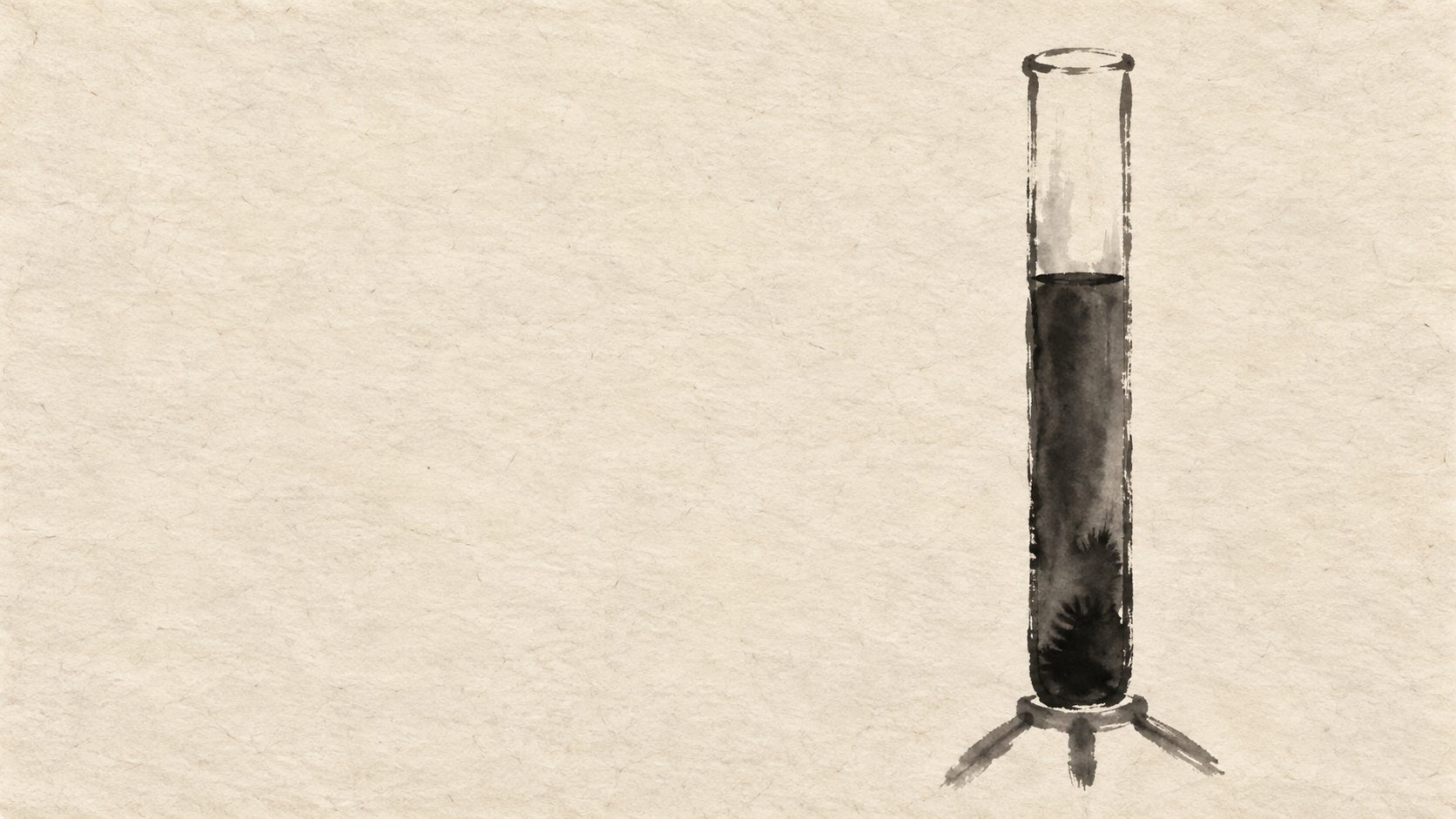
An ESR test measures how far red blood cells drop through plasma in one hour, in mm/hr. Westergren upper limits are 15 mm/hr for men under 50, 20 mm/hr for women under 50, and 30 mm/hr for women over 50.1 A raised ESR often reflects inflammation, though anemia, pregnancy and age raise it too. It does not identify the cause.
Two things make this test harder to read than it looks. The first is that "normal" moves with your age and your sex, by a lot. The second is that the number itself depends on how your lab ran the test, at what temperature, and on your hemoglobin. A Central Indian study of 1,393 healthy adults, published in April 2026, found a reference interval of 2.3 to 21.6 mm/hr at room temperature. The same people measured at 18 °C gave 0.9 to 18.3 mm/hr.2 This page gives you the ranges, what each band usually means, and the reasons your result may not mean what the printed cut-off suggests.
What is an ESR test? Copy link
An ESR blood test is the same thing as an ESR test, and ESR stands for erythrocyte sedimentation rate. Erythrocyte is the medical word for a red blood cell. The lab puts anticoagulated blood in a thin vertical tube and measures, in millimetres, how far the red cells have sunk after exactly one hour.1 The result is written as mm/hr.
Your red cells normally repel each other. They carry a negative surface charge that keeps them apart, so they drift down slowly. Inflammation raises the level of certain plasma proteins, fibrinogen above all. Those proteins coat the cells and bridge them, cancelling the repulsion. The cells then stack into columns, like coins pushed together, and a stack falls faster than a single cell.1 So a faster fall means more of those proteins, which usually means more inflammation.
On your report it appears as ESR, sed rate, or the Westergren sedimentation rate. It is often ordered alongside a complete blood count, and whether it needs a separate tube depends on the method your lab runs. It sits in the inflammation group of routine blood tests. No fasting is required.1 Studies of time-of-day effects have been small and their findings inconsistent, so in practice a sample can be taken at any hour.8
ESR normal range by age and sex Copy link
There is no single ESR normal range that fits everyone, or that fits you across your life. The upper limit rises with age, and it is higher in women at every age. These are the Westergren reference values.1
| Group | Usual upper limit |
|---|---|
| Men under 50 | 15 mm/hr or lower |
| Women under 50 | 20 mm/hr or lower |
| Men over 50 | 20 mm/hr or lower |
| Women over 50 | 30 mm/hr or lower |
| Children | 10 mm/hr or lower |
If you tested in India, the Indian data give a slightly different picture. In 1,393 healthy adults from Central India, mean age 44.8 years, the room-temperature interval was 2.3 to 21.6 mm/hr. That interval covers one standard deviation either side of the mean.2 Read that number with care. One standard deviation either side captures roughly the middle two-thirds of a normally distributed population, where a conventional reference interval captures 95 percent. So 21.6 mm/hr should not be treated as a clinical upper cut-off. A properly derived interval would need percentile analysis of a reference population. ESR values are also skewed, so the missing tail cannot be estimated from the standard deviation. The study was also single-centre and heavily male, with 1,051 men to 342 women. Its value is the direction it points. Indian values sit close to Western ones, and the authors argue that Indian labs should build their own reference values.2
An Italian study of 989 healthy adults published in April 2025 went further and set separate intervals for each analyser. By Westergren the interval was 1 to 22 mm/hr for women aged 18 and over. For men under 69 it was 1 to 14 mm/hr. On one automated analyser the same population gave 1 to 25 mm/hr for women and 1 to 18 mm/hr for men.3 The reference interval printed on your report should belong to the machine that ran your sample. Compare your result with that interval first.
Why ESR runs higher in women Copy link
The ESR normal range for females sits higher than the male range at every age, and the gap is wide. In a population study of 1,472 adults aged 18 to 91, the median ESR was 12 mm/hr in women and 6 mm/hr in men.4 The female median was double the male median. Age did the same thing: people over 65 had a median double that of people aged 18 to 35.4 That study was done in a Spanish municipality. Treat the size of the gap as indicative for Indian women, and as measured in Spanish ones.
The mechanism runs through plasma protein and red cell concentration. Hormones do not act on the test directly. Women run lower hemoglobin on average, and a thinner red cell column sediments faster than a crowded one. Menstruation and pregnancy both raise the ESR, and pregnancy keeps it raised.1
Take a woman of 38 with an ESR of 22. That sits just above the traditional 20 mm/hr limit for her age and sex. It also sits inside the 1 to 22 mm/hr Westergren interval the 2025 Italian study derived for adult women.3 A man of 38 with the same 22 is further outside his own limit. The same printed number carries different weight depending on whose report it is, and on which interval the lab applied.
What does a high ESR mean? Copy link
Most often inflammation, though not always. The ESR times a physical process and assays no single disease molecule, so anything that raises fibrinogen or the immunoglobulins moves it. So does anything that thins the red cell column. Anemia, pregnancy and advancing age do that with no inflammatory disease present.1
The causes worth knowing about, each documented in the clinical literature:1
- Infection, bacterial or viral, including bone and joint infection and tuberculosis.
- Autoimmune and inflammatory disease: rheumatoid arthritis, lupus, systemic vasculitis, polymyalgia rheumatica, giant cell arteritis.
- Anemia, which raises the ESR by itself, with no inflammatory disease present.
- Kidney disease and low serum albumin.
- Thyroid disease.
- Cancers, particularly multiple myeloma and lymphoproliferative disorders.
- Age, female sex and pregnancy, none of which are illness.
The list is long on purpose. A test that rises in that many situations cannot tell you which of them you have. The ESR earns its place by telling a doctor whether to look further, and by tracking a condition already diagnosed over weeks. It performs badly as a screening test in people with no symptoms, because it lacks both sensitivity and specificity for that job.1
How high is worrying? What 30, 50, 70 and 100 mean Copy link
You arrived with a number, so here are the bands. Only the figure above 100 mm/hr is a recognised clinical threshold. The groupings below it are a practical way to think about your result. No guideline defines them as diagnostic categories. Read yours against your age, your sex and how you actually feel.
An ESR of 20 to 30 mm/hr
Usually a small rise, and for a woman over 50 it sits inside the reference range. For a man under 50 the same figure sits above his. With no symptoms, the standard response is to repeat it a few weeks later, after any short-lived illness has cleared.1
An ESR of 40 to 50 mm/hr
A definite rise that wants an explanation. The common answers are an infection, a flare of an inflammatory condition, anemia, or the weeks after your surgery or injury. A doctor will examine you and choose the next test from your symptoms. The ESR itself does not select that test.
An ESR of 70 to 100 mm/hr
A marked rise. At this level the proportion of results with a serious underlying cause climbs steeply, and prompt assessment is the usual advice. In people over 50 with new headache, scalp tenderness or jaw pain, this band raises the question of giant cell arteritis. In a 25-year series the average ESR there exceeded 90 mm/hr, and 99 percent of patients were above 30 mm/hr.1 A normal ESR does not exclude that diagnosis, which is why the symptoms lead and the number follows.1
An ESR above 100 mm/hr
An extreme elevation, and the one band where the number carries real weight on its own. Values above 100 mm/hr have a low false-positive rate for significant underlying disease. Infection accounts for most of them, followed by connective tissue disease and metastatic cancer.1 This warrants medical assessment without delay. It still does not name the disease.
One caution runs through all four bands. Some people with active rheumatoid arthritis, active lupus, serious infection or cancer have a normal ESR.1 A reassuring number is not a clean bill of health if you feel unwell.
Why the same blood can give two different ESR numbers Copy link
This is the part almost no ESR page tells you, and it changes how you should read your own result. The ESR is not an assay. Nothing is measured chemically. A physical process is timed, and that process responds to the conditions in the room.
Temperature is one of the pre-analytical conditions that moves it, and India makes that matter. Researchers at a Central Indian centre ran samples from 1,393 healthy adults twice. Once at ambient room temperature, once at a controlled 18 °C. The room-temperature mean was 11.9 mm/hr. The 18 °C mean on the same blood was 9.6 mm/hr.2 The systematic difference was 2.37 mm/hr, and it was larger in women than in men. A warmer room thins the plasma, the cells fall faster, and the number rises.1
Handling shifts your result too, in both directions. A tube standing 3 degrees off vertical can read up to 30 percent higher. An underfilled tube with air in it reads high. Delay does the opposite. Red cells left standing lose their disc shape and stack less well, so a late sample reads low. The test should be started within two hours of the draw. Clotted blood also reads low.1
Then there is the method itself. The Westergren technique has been the international reference standard since 1973 and was reaffirmed in 2011.1 Most labs no longer run it unmodified. Many use automated analysers, and many of those do not watch the cells fall at all. They measure how fast the cells begin to aggregate in the first minutes and calculate a value from it. The International Council for Standardization in Haematology reviewed the alternatives. It reported that results from modified methods could differ from the reference values by as much as 142 percent.1 Smaller Indian labs may still run the older Wintrobe method. It uses a 100 mm tube with a narrower bore, and is less sensitive than Westergren.1
The fair counterweight is that individual modern analysers, properly validated, track Westergren closely. A four-site Italian study of three current instruments found correlation coefficients of 0.974 to 0.981 against the manual method, with imprecision under 10 percent.5 Individual analysers are not the issue. The word ESR covers a family of methods that produce related but non-identical numbers, and the method may not be prominent on your report.
Three consequences follow, and they are the practical value of this page. Compare your result with the interval printed on your own report, not with a figure from the internet. Do not compare an ESR from one lab with an ESR from another and read the difference as a change in your health. When a number is being tracked over time, use the same lab each time.
Does anemia raise ESR? Copy link
Yes, and it does so without any inflammation being present in you.1 Fewer red cells in the same volume of plasma means less crowding, less friction, and a faster fall. This is particularly relevant in India, where anemia is common. Anemia can contribute substantially to an elevation, so the result should be read alongside the hemoglobin, the hematocrit and the clinical picture.
Anemia also widens the disagreement between methods, and the effect is not small. A study at a teaching hospital in Ludhiana compared automated and hematocrit-corrected Westergren results in 1,377 anemic outpatients, all with a hematocrit under 35 percent. At low ESR values the two methods sat close, with a mean difference of 2.33 mm/hr. At very high values the mean difference reached 43.3 mm/hr, and the limits of agreement ran from minus 5.1 to plus 81.5 mm/hr.6 The authors concluded that automated measurement can stand in for Westergren at low values in anemic patients. High values, they wrote, should be confirmed by the reference method.6
Read plainly: the higher your ESR, and the more anemic you are, the less certain the exact figure is. A reported 80 in someone with a hemoglobin of 8 is a signal that something needs investigating. It is not a precise quantity. That is the strongest argument for reading an ESR next to the CBC drawn with it. Check whether the hemoglobin is low before treating the ESR as a mystery, and whether ferritin explains the anemia.
What a low ESR means Copy link
A low ESR is rarely investigated on its own, and for you it mostly means nothing. The reason to know about it is the opposite case. Something lowering your ESR can mask real inflammation, so the result comes back reassuring when it should not.
The documented causes are mechanical. Polycythemia, meaning too many red cells, thickens the blood and slows the fall. Sickle cell disease and spherocytosis change the shape of the cells so they cannot stack into columns. A very high white cell count, clotted or delayed samples, and severe protein deficiency do the same.1 Some drugs lower it as well, including non-steroidal anti-inflammatory painkillers, statins and valproic acid.1 Regular alcohol intake and habitual physical activity are both associated with lower values in population data.14
Tell the doctor what you take. In someone on daily anti-inflammatories, a normal ESR may sit below the inflammation actually present.
Does a high ESR mean cancer? Copy link
No. A high ESR does not mean cancer. Malignancy is one of several causes of a markedly raised ESR, and infection is much more common than cancer in that group.1 Multiple myeloma and some lymphoproliferative disorders are the ones most associated with very high values. High concentrations of circulating immunoglobulin promote the rouleaux formation the test measures.1
The ESR is too insensitive and too unspecific to screen for cancer, and it is not used for that. Some people with cancer have a normal ESR.1 A raised ESR with unexplained weight loss, night sweats, bone pain or persistent fever gets investigated. A raised ESR in someone who feels well is investigated more cautiously, especially in an older woman or a person with anemia. Repeat testing after a few months is a reasonable step.1
ESR vs CRP: which test answers which question Copy link
Your doctor may order both, often enough that people assume the two duplicate each other. They measure different things on different clocks. C-reactive protein is a single protein the liver makes, measured directly, and it moves within hours. The ESR is a physical property of whole blood that shifts over days and stays shifted for weeks after the cause has gone.
That lag is a weakness if you want to know what is happening today. The slower rise and fall can help when your doctor is following a chronic inflammatory condition. The ESR still cannot tell you what happened during any particular week in the past. The ESR also carries passengers that CRP does not: your hemoglobin, your age, your sex and your plasma protein pattern all move it.1
Where the ESR still holds its ground is in a narrow set of conditions. Giant cell arteritis and polymyalgia rheumatica are the clearest, and the ESR is part of how both are assessed.1 In rheumatoid arthritis it runs alongside CRP, watching for flares and tracking treatment. Both correlate poorly with how active the joints actually are, and a person with active disease can have a normal result.1
For many questions about acute inflammation, CRP is the more responsive of the two, because it rises and falls faster. If your doctor ordered both, the reason is usually that they want the fast number and the slow one side by side.
CBC with ESR, and the complete hemogram Copy link
Many Indian labs sell the ESR bundled with a complete blood count. You will see it listed as a CBC ESR test, CBC with ESR, complete hemogram, or a fever panel that adds a malaria smear. Some laboratories sell the CBC and ESR together as a combined hemogram, and some add a malaria smear as a fever panel.
A basic full body checkup may or may not include the ESR; that varies by provider. The CBC ESR combination makes clinical sense for one specific reason, and you should understand it before you pay for it. Your ESR is easier to interpret alongside your hemoglobin and hematocrit, because anemia raises it independently of inflammation.16 The CBC supplies exactly that. A raised ESR with a hemoglobin of 9 is a different finding from the same ESR with a hemoglobin of 14. The two reports answer that only together.
Whether that means two tubes depends on the method. The classic Westergren workflow needs its own citrated preparation, and that sample cannot be shared with other tests because of the volume it takes.1 Several automated systems read the sedimentation directly in the EDTA tube already drawn for the CBC. That removes the second tube and shortens the turnaround.7 Either way it is one visit and one prick.
Can you reduce a high ESR? Copy link
You cannot lower it directly, and the attempt misunderstands the test. The ESR is a reading of your plasma proteins, which are themselves a reading of something else. Treat the infection, control the inflammatory condition, correct the anemia, and the number follows over the weeks after. There is no supplement, diet or drug that usefully targets the number itself, and lowering it without addressing the cause would only remove a signal.
Where the cause is low-grade inflammation, the levers with population evidence behind them are the familiar ones. In a study of 1,472 adults, body mass index, metabolic syndrome and smoking were each independently associated with a higher ESR. Regular physical exercise went with a lower one.4 Those are associations from a cross-sectional study in one Spanish town, with modest effect sizes. Read them as a direction of travel.
Anti-inflammatory painkillers and statins do lower the ESR.1 That is a reason to mention them to your doctor. It is no reason to take them. Medication pushes the figure down below the state underneath it.
ESR test price in India Copy link
The ESR is among the cheapest tests you can book in India. Across the published list prices of the large national chains, checked on 18 September 2026, the standard ESR ran from roughly ₹120 to ₹330.9 What moves it is the city, the provider and whether you add home collection. Neighbourhood labs are often cheaper again. Reports usually arrive the same day, and no fasting is needed. Prices change, so read that range as a September 2026 snapshot and check the current figure before you book.
Two things on your booking page matter more than the price. Whether the test is the automated version or manual Westergren, because the reference interval should match the method. And whether the reference range on the report is split by age and sex at all. Published ranges differ between Indian providers by a factor of two. One national chain prints a flat 0 to 20 mm/hr on its ESR booking page. A home-collection provider running capillary photometry prints 0 to 10 mm/h across its city pages.9 Neither splits the figure by age or sex. Against the Westergren values, a flat 0 to 20 band is too tight for a woman over 50. For a man under 50 it is too loose.1 The interval belonging to the method that measured your sample is the one that counts for you.
When to see a doctor about an ESR result Copy link
Seek assessment promptly for an ESR above 100 mm/hr. Seek it too if your raised ESR comes with fever, weight loss, night sweats, persistent bone or joint pain, or a new headache with scalp tenderness after 50.1 Those symptoms, not the number, set the urgency.
If you feel well, a mildly raised ESR may simply be repeated after an interval instead of triggering an extensive investigation. That holds when your history, your examination and your other tests are reassuring.1 Persistent elevation with no explanation does warrant a further look.
Bring your earlier reports, and note which lab did each one. The direction of travel matters more than any single value, and a comparison only works if the method was the same.
Questions people ask about the ESR test Copy link
Why is ESR high in females?
A normal ESR is higher in women at every age. In a study of 1,472 adults the median was 12 mm/hr in women and 6 mm/hr in men. Lower hemoglobin, menstruation and pregnancy all push it up. A value that looks high against a generic figure can be normal for a woman.
What happens if ESR is high?
A high ESR often means inflammation somewhere, though anemia, pregnancy, age and laboratory factors raise it too. It does not say where or why. Infection, autoimmune disease, kidney disease and low albumin all lift it. What happens next depends on your symptoms and usually a second test. The ESR alone does not settle it.
What is the normal ESR range by age?
By the Westergren method the usual upper limits are 15 mm/hr for men under 50 and 20 mm/hr for women under 50. Over 50 they rise to 20 mm/hr for men and 30 mm/hr for women. Children sit at 10 mm/hr or lower. Compare your result with your own report.
What is the ESR level in cancer patients?
There is no ESR level specific to cancer. Very high values above 100 mm/hr occur in multiple myeloma and lymphoma, but infection causes most extreme elevations. Some people with cancer have a completely normal ESR. The test is not used to screen for cancer because it is too unspecific.
Is a high ESR dangerous?
The ESR is a signal, not a disease, so the number itself is not dangerous. What it points to may be. Values above 100 mm/hr have a low false-positive rate for serious underlying illness and need prompt assessment. Mild elevations in older adults and in women are often ordinary.
How can I reduce a high ESR?
You do not lower an ESR directly. It falls when whatever raised it settles, over weeks. Treating an infection, controlling an inflammatory condition or correcting anemia brings it down. No supplement targets the number itself, and lowering it with painkillers only hides a signal.
Can anemia increase ESR?
Yes, and without any inflammation present. Fewer red cells in the same volume of plasma means they fall faster. Anemia also widens the gap between methods. In 1,377 anemic Indian outpatients the mean difference between automated and corrected Westergren values reached 43.3 mm/hr at very high readings.
Is fasting required for an ESR test?
No. Indian labs list the ESR as needing no special preparation, and a small study found no effect from eating. Evidence on time-of-day effects is mixed and the studies are small, so a sample can usually be taken at any hour. If you have been told to fast, another test in the same draw normally needs it.
What is the ESR test price in India?
Roughly ₹120 to ₹330 at the large national chains, checked in September 2026. The city, the provider and home collection all move it. Neighbourhood labs are often cheaper. No fasting is needed and reports usually arrive the same day. Prices change, so check the current figure before booking.
References Copy link
- Tishkowski K, Zubair M. Erythrocyte Sedimentation Rate. In: StatPearls [Internet]. Treasure Island (FL): StatPearls Publishing; last update 7 July 2025. https://www.ncbi.nlm.nih.gov/books/NBK557485/
- Verma KK, Upadhyay H. Assessment of ESR by Manual Westergren at Room Temperature and Automated ESR Analyzer at 18 °C in a Hospital-Based Central Indian Cohort: Establishment of Reference Ranges. Indian J Hematol Blood Transfus. Published online 8 April 2026. doi:10.1007/s12288-026-02406-7. Single-centre; 1,393 participants analysed, 1,051 male; reference interval reported as mean ± 1 SD. https://link.springer.com/article/10.1007/s12288-026-02406-7
- Lorubbio M, Diamanti D, Pieroni C, et al. Erythrocyte Sedimentation Rate Reference Intervals Determined via VES-MATIC 5 and CUBE 30 Touch with Respect to the Westergren Method. Diagnostics (Basel). 2025;15(9):1101. doi:10.3390/diagnostics15091101. https://www.mdpi.com/2075-4418/15/9/1101
- Alende-Castro V, Alonso-Sampedro M, Vazquez-Temprano N, et al. Factors influencing erythrocyte sedimentation rate in adults: New evidence for an old test. Medicine (Baltimore). 2019;98(34):e16816. doi:10.1097/MD.0000000000016816. Cross-sectional, single Spanish municipality. https://doi.org/10.1097/MD.0000000000016816
- Tomassetti F, Calabrese C, et al. Performance Evaluation of Automated Erythrocyte Sedimentation Rate (ESR) Analyzers in a Multicentric Study. Diagnostics (Basel). 2024;14:2011. https://www.ncbi.nlm.nih.gov/pmc/articles/PMC11431749/
- Narang V, Grover S, Kang AK, Garg A, Sood N. Comparative Analysis of Erythrocyte Sedimentation Rate Measured by Automated and Manual Methods in Anaemic Patients. J Lab Physicians. 2020;12(4):239-243. doi:10.1055/s-0040-1721155. https://pubmed.ncbi.nlm.nih.gov/33390672/
- Cennamo M, Giuliano L, Arrigoni G, Fardone V, Russo R, De Tomasi LM, Bertani F, Cammarota G, Brunetti G, Del Vecchio L, Partenope M. Method Comparison of Erythrocyte Sedimentation Rate Automated Systems, the VES-MATIC 5 (DIESSE) and Test 1 (ALIFAX), with the Reference Method in Routine Practice. J Clin Med. 2024;13(3):847. doi:10.3390/jcm13030847. https://pubmed.ncbi.nlm.nih.gov/38337540/
- Yucel M, Ihtiyar A, Koseoglu M. The effect of diurnal variation on erythrocyte sedimentation rate. Turk J Biochem. 2021;46(1):59-63. doi:10.1515/tjb-2020-0025. Twelve volunteers, Westergren method; found no diurnal variation and no fasting-satiety effect. Older work using other sedimentation methods has reported circadian variation, so the evidence is not settled. https://doi.org/10.1515/tjb-2020-0025
- Published list prices and printed reference ranges for the ESR, taken from the public booking pages of major Indian diagnostic chains and home-collection providers on 18 September 2026. Individual provider pages are held in the Sapiens editorial ledger and are not reproduced here. Prices and printed ranges change; see editorial standards.
This article is general health information and does not diagnose anything. Every laboratory sets its own reference interval and runs the ESR by its own method. The interval printed on your report comes first. A result outside it is a question for a doctor who can examine you. Prices quoted are published list prices from major Indian diagnostic chains, checked on 18 September 2026, and they change. Sapiens is operated by Pangaea Sciences Private Limited, Hyderabad. Editorial standards: joinsapiens.in/editorial-standards. Report an error on this page.