Labs & Reports · CBC & blood counts
RBC Count Normal Range: Men, Women, Low & High Results
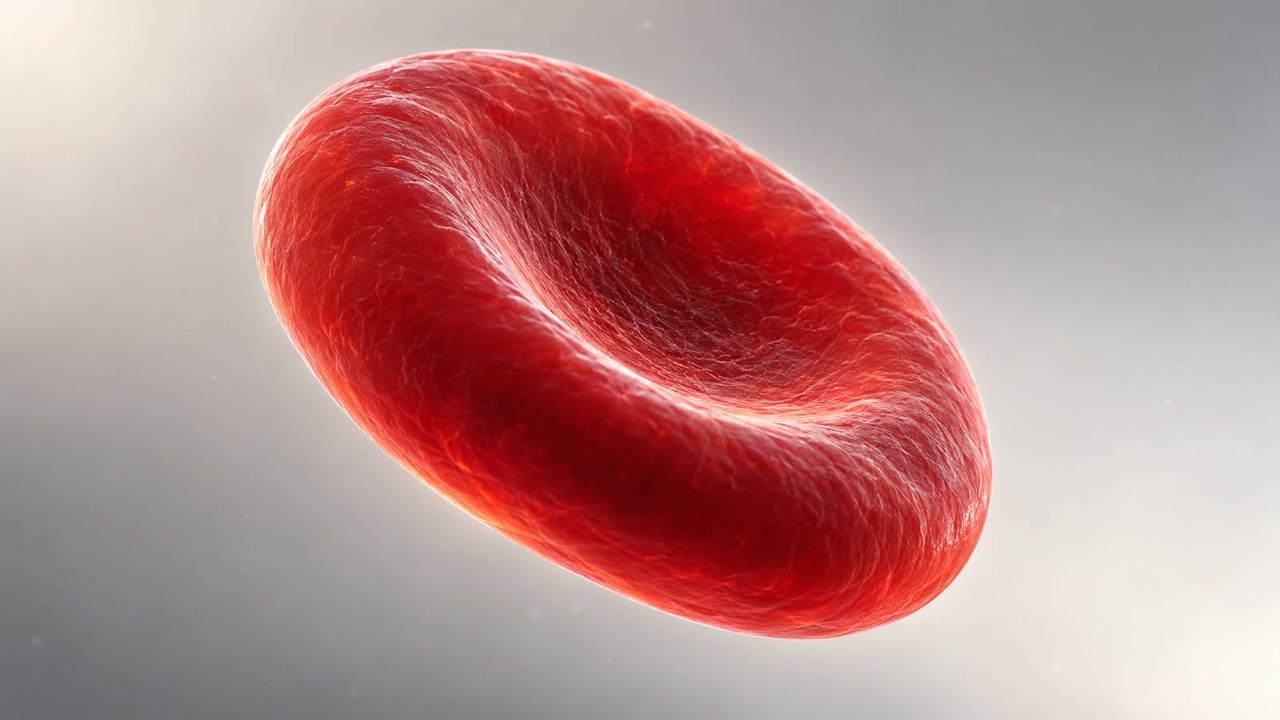
A normal RBC count is about 4.5 to 5.5 million red cells per microliter for men and 3.8 to 4.8 million for women on most Indian reports, printed as million/cumm or ×10¹²/L.1 A current MedlinePlus reference page lists 4.2 to 5.7 million/µL for men and 3.8 to 5.1 for women.2 Reference intervals vary between laboratories, which is why your own report's range takes precedence: a man's count of 4.3 can read low against one interval and normal against another. Neither window diagnoses anything on its own.
The useful question is whether the count makes sense next to your hemoglobin, hematocrit and cell size. That relationship is what separates an iron problem from a small-cell inherited trait from a morning without water, and most of this page is about reading it.
What is the normal RBC count? Copy link
RBC stands for red blood cell. The count is how many red cells sit in one microliter of your blood, and it arrives as one line inside the complete blood count (CBC); there is no separate RBC test. "Total RBC count" and "erythrocyte count" are the same measurement under other names, so there is no separate RBC test normal range to look up; the reference range for RBC is the RBC line of the CBC.2 The red cell indices printed under it (MCV, MCH, MCHC, PCV) describe the cells' size and filling and are a separate reading from the count.
| Group | Textbook range1 | MedlinePlus reference range2 | Healthy Chennai adults, 2.5th–97.5th percentile1 |
|---|---|---|---|
| Adult men | 4.5–5.5 | 4.2–5.7 | 4.01–6.04 |
| Adult women | 3.8–4.8 | 3.8–5.1 | 3.44–5.30 |
RBC normal range for a female, and what pregnancy does to it
For a woman who is not pregnant, 3.8 to 4.8 million/µL is the usual printed range; current MedlinePlus lists 3.8 to 5.1 million/µL, while individual laboratories may use different limits.2 Pregnancy pulls the number down without anything being wrong. Plasma volume starts expanding by 10 to 15% between weeks 6 and 12, and total blood volume rises by roughly 1.5 liters over the pregnancy, so the same red cells are spread through more fluid and the count per microliter falls.3 Two cautions travel with that. Dilution can sit on top of real iron deficiency, so a low count in pregnancy still gets read against hemoglobin, using the trimester-specific cut-offs below. And the daily iron and folic acid your antenatal clinic prescribes is preventive, so it continues whatever the count says.7, 19
Outside pregnancy, heavy periods are the commonest slow leak. Soaking through a pad in an hour, clots larger than a coin, or bleeding that reorganizes your week are worth saying out loud at the appointment, because they change what the doctor orders next: iron studies for the consequence, and sometimes a look for the cause.16
Normal RBC count in male and female: why men run higher
The RBC normal range in a male runs higher because testosterone drives red cell production. The textbook interval quoted above is 4.5 to 5.5 million/µL; current MedlinePlus lists 4.2 to 5.7, illustrating why laboratory-specific intervals differ.2 The same fact explains why testosterone injections, anabolic steroids and erythropoietin push the count above range.2 Tell whoever reads the report if you take any of them, including gym products bought without a prescription, and do not stop a prescribed medicine because of one flag.
RBC count by age: children and older adults
The adult table does not apply to a newborn or a child. Counts are highest at birth, dip over the first months as fetal cells are retired, and then follow age-specific intervals that your lab prints on a paediatric report.2 At the other end, the count does not have to fall with age. In the Chennai reference study, men over 45 had slightly higher mean counts than men under 45 (5.21 vs 4.93 million/µL), and women showed no meaningful age difference.1 A new low result in a 60-year-old deserves the same questions it would get at 30, so bring the previous reports: a drift inside the printed range can matter more than a single flag outside it.
Million/cumm, million/µL and ×10¹²/L: the same count
A cubic millimeter (cumm or mm³) and a microliter (µL) are the same volume, so these are one result written four ways:
The same count, four ways
4.9 million/cumm = 4.9 million/µL = 4.9 ×10⁶/µL = 4.9 ×10¹²/L
If the report prints 4,900,000 cells/µL, that is 4.9 million. The total RBC count normal range is the same range; "total" only distinguishes the line from the total WBC count beside it. RBCs on a urine report are a different measurement altogether, and this table does not apply to them.
How much RBC should be in the human body? Copy link
About 25 trillion in a 70 kg adult, which makes red cells roughly 84% of all the cells you own by count.4 Your CBC reports a concentration, the RBC number in one microliter of blood, so nobody is counting them all. Each cell lasts around 100 to 120 days while the marrow releases roughly 2 million replacements a second.5
That lifespan sets the pace for slow changes. Cut off the iron supply and the count drifts down over two to three months as old cells retire unreplaced. It does not set a floor on fast ones: bleeding or rapid cell destruction can drop the count in days. Treatment works on the faster clock too. Restore the iron and the marrow responds within days, reticulocytes rise first, and hemoglobin usually starts climbing within two to four weeks, which is why the response is checked with a CBC inside the first month. Refilling the iron stores takes several months longer.16
Why a healthy Indian can sit outside the printed range Copy link
When a Chennai hospital measured 500 adults who had passed a preventive health check, 252 men and 248 women with no anemia, diabetes or chronic illness, 36.5% of the men and 27.4% of the women had an RBC count outside the textbook limits printed on their own reports.1 The healthy men ran from 4.01 to 6.04 million/µL, the women from 3.44 to 5.30, and most of the outliers sat below the printed floor.
Read that with its limits attached. It is one city, one year (2011), and people who paid for a check-up, so it describes that group and the rest of the country may differ. "Apparently healthy" is a screening label; the study's own hemoglobin intervals extended below the anemia thresholds in use today, and the authors put the low tail down to the background of nutritional deficiency and gut parasites in the population.1 An ICMR task-force subset of 472 clinically healthy women aged 18 to 40 from six zones of the country found the same shape, an RBC interval of 3.68 to 5.55 million/µL, wider and lower at the bottom than the printed limits.6
So a count of 4.3 in a man, flagged L on the printout, is common among healthy Indian men. Of course, common and fine are different claims, and the way to tell them apart is the hemoglobin line, a ferritin, and the trend against your last report. It is not a reason to panic at 11 pm, and it is not a reason to skip the follow-up either.
What happens if your RBC count is low? Copy link
A low RBC count, whether the report says decreased RBC, total RBC count low, erythrocyte count low, or just flags the RBC blood test low, means fewer cells per microliter than the lab's floor. It often travels with anemia, but anemia is defined on hemoglobin; the cells' size and how much hemoglobin each one carries can change independently of how many there are. So, as you'd expect, the first move is to read the hemoglobin line.
When there is anemia, what you notice first is usually effort: the third flight of stairs, the walk from the parking lot, an afternoon heaviness that sleep does not clear. Pale nail beds and the inner lower eyelid looking pink-white are the signs a doctor checks; a pounding heartbeat on climbing, cold hands, or a craving to chew ice turn up in some people. None of these is specific, and a normal RBC count does not rule anemia out. A mildly low count with a normal hemoglobin is usually a shape story, fewer but larger cells, and the direction to look is B12 and folate, though that pattern on its own does not diagnose either.
The hemoglobin levels that define anemia
The WHO's 2024 guideline sets anemia at hemoglobin below 13 g/dL in men aged 15 to 65 and below 12 g/dL in non-pregnant women in the same age band. In pregnancy the cut-offs are 11 g/dL in the first and third trimesters and 10.5 g/dL in the second. Children have age-specific thresholds, and altitude and smoking shift the interpretation.7 These define anemia; they are not transfusion triggers.
Is there a dangerous RBC count? No fixed one. Urgency depends on the hemoglobin or hematocrit, how quickly they changed, and symptoms such as chest pain, breathlessness at rest, fainting, new weakness, or active bleeding. A reassuring-looking count does not override any of those.
Reasons for a low RBC count Copy link
Doctors sort the causes into four bins: less being made, blood being lost, cells being destroyed early, and dilution. More than one can be true at once, which is why a CBC alone never picks the treatment. In India the first bin usually starts with iron. The fifth National Family Health Survey found 57% of women aged 15 to 49 and 25% of men in the same band anemic, and iron deficiency is the largest single contributor.8
- Iron deficiency. The marrow cannot build hemoglobin without iron, so it makes fewer, smaller, paler cells. A ferritin test is how you confirm the stores are low, with one catch: ferritin rises with inflammation and can read normal or high in someone who is iron-deficient, so transferrin saturation and an inflammatory marker settle an unclear result. A serum iron on its own is not an iron assessment.16
- Blood loss. Heavy periods, piles, a stomach ulcer, or a slow gut bleed you never see. Confirmed iron-deficiency anemia in a man, or in a woman past menopause, usually earns a look for a gastrointestinal source before anyone blames diet.16 Black or tarry stools are the sign to mention.
- Vitamin B12 or folate deficiency. Common in vegetarian households and in people on long-term metformin or acid-suppressing tablets. These make fewer, larger cells, so the count drops before the hemoglobin does, though B12 deficiency can also exist with a normal count and a normal MCV. Numbness, tingling, or balance trouble alongside a low count needs prompt review, because the nerve damage is the part that does not fully reverse.18
- Kidney disease. Your kidneys make erythropoietin, the hormone that tells the marrow to produce red cells, and as kidney function falls the signal weakens; iron problems and inflammation add to it. Anemia becomes more common as chronic kidney disease advances, and the KDIGO guideline treats it as part of routine kidney care.9 If your creatinine was flagged on the same draw, read the kidney function test decoder next.
- Chronic inflammation or infection. Tuberculosis, rheumatoid arthritis, long-standing infections. The body locks iron away from the marrow as a defense, so the count drifts down while ferritin reads normal or high. Treating this as a diet problem misses the illness underneath.16
- An underactive thyroid. Thyroid hormone is one of the signals that keeps red cell production ticking, and a mild anemia can come with hypothyroidism. If your TSH is raised on the same report, the two findings may be one problem.
- Pregnancy or extra fluid. Dilution, as above. Expected and monitored, and never assumed to be the whole story until the hemoglobin and the antenatal record agree.3
- Cells being destroyed early (hemolysis), marrow disorders, chemotherapy and some other medicines. Rarer, and usually picked up by a reticulocyte count and a blood film; the RBC line alone rarely shows them.
Notice what is missing from that list, which surprises people: "not eating enough". Diet rarely drops the count on its own unless it has stripped out iron, B12 or folate for months. The question to ask is which of the three is short. One more blood test answers it; a food chart cannot, and starting therapeutic iron because a count is low, before anyone has checked ferritin, is how thalassemia trait gets treated for years as anemia.
High RBC count: what causes it Copy link
A high RBC count, called erythrocytosis or polycythemia, means either more red cells than usual, less plasma for them to float in, or many small cells (the thalassemia-trait pattern, covered next). Hemoglobin and hematocrit tell your doctor which of the three you have, and only the first needs a work-up for the marrow.2, 11
- Dehydration. A blood draw after a night of loose motions, a long fast in summer heat, or a morning without water concentrates the blood. Count, hemoglobin and hematocrit all rise together and settle after fluids.2 Your doctor may ask for a repeat once you have recovered. Drink normally in the meantime; forcing fluids does not help, and is unsafe if you have a fluid restriction.
- Smoking. Carbon monoxide in smoke locks onto hemoglobin, the body reads it as low oxygen, and the marrow compensates. In a large American survey, smokers ran about 0.4 g/dL higher in hemoglobin than never-smokers, with the count rising in step and the shift growing with cigarettes per day.10 Beedis do the same.
- Altitude. Thin air raises the count within weeks and it stays raised while you are up there.2 A Ladakh posting, a season in Leh, a month in Manali: any of these can put you above range on a CBC drawn in Hyderabad the week you return.
- Lungs or heart not delivering oxygen. Chronic lung disease, untreated sleep apnea (loud snoring, waking unrefreshed), or heart conditions present from birth. The marrow responds to the low oxygen it senses.2
- Testosterone, anabolic steroids, or erythropoietin injections. Each directly stimulates production.2 Gym products sold without a prescription sometimes contain the first two without saying so.
- Kidney causes. Some kidney disorders, and rarely a tumor, make excess erythropoietin.2
- Polycythemia vera. A marrow condition in which red cells are made regardless of need. It is diagnosed on hemoglobin and hematocrit; the RBC count itself is not a formal diagnostic criterion. The thresholds are hemoglobin above 16.5 g/dL in men or 16 in women, or hematocrit above 49% and 48%, together with a JAK2 mutation on a blood test and characteristic marrow findings, under the 2022 WHO classification.11 Crossing a threshold is a reason to investigate, and a value below it does not close every question.
The short answer for you: if your count is high and you were dehydrated, smoke, or have just come down from a hill station, expect a repeat under ordinary conditions. If it stays high, the hemoglobin and hematocrit establish whether true erythrocytosis is present; the next steps may include looking for secondary causes, measuring serum erythropoietin and testing for JAK2. A JAK2 result is an important part of that work-up, and polycythemia vera is diagnosed from the combination of counts, mutation testing and, when required, bone marrow findings. Do not start aspirin, donate blood to "thin it", or stop a prescribed medicine on your own to bring the number down.
High RBC count with low hemoglobin: could it be thalassemia trait? Copy link
Yes, and especially when MCV, the average cell size, is low. Here is the reading that changes what you do next. A woman comes in tired. Her hemoglobin is 10.5. Her RBC count is 5.3 million/µL, above range for a woman. Her MCV is 62 fL. She has been on iron tablets for four months and the numbers have not moved. (An illustrative result; she is a composite.)
That combination, many cells but each one small and underfilled, is the signature of beta-thalassemia trait, the carrier state that about 3.5 to 4% of Indians carry without knowing it, rising to 8 to 10% in some communities in Gujarat, Punjab, Sindh-origin families, and parts of the north-east.12 Carriers are healthy. Their marrow makes small cells and, to keep oxygen delivery up, makes more of them, so the count goes up while the hemoglobin sits low. In iron deficiency the marrow does the opposite: fewer cells and small cells, so both fall together.
Worked example: many cells, low hemoglobin
Divide MCV by the RBC count. 62 ÷ 5.3 = 11.7. Below 13 points toward thalassemia trait; above 13 toward iron deficiency.13 In validation studies its sensitivity for trait ranges from about two-thirds to nine in ten depending on the population, so it flags rather than diagnoses; mixed pictures and borderline values blunt it further.14, 17
Iron does not treat thalassemia trait itself, but the two conditions coexist more often than people expect. In one antenatal series of 178 women with small-cell anemia, 9 had both, and their MCV-to-count ratio sat between the two pure patterns.17 Iron deficiency also lowers HbA2, the marker that confirms beta-trait on hemoglobin electrophoresis or HPLC, so the usual sequence is a blood film and ferritin first, then the hemoglobin analysis, and iron replacement for any deficiency found alongside.16
Why does it matter beyond which tablets you take? Because two carriers together have a one-in-four chance, in each pregnancy, of a child with thalassemia major, which needs lifelong transfusions; India records an estimated 10,000 to 12,000 such births a year.12 A high count with a low hemoglobin, in a person who is otherwise well, is a reason to test yourself and, before a pregnancy, your partner. It is one of the few findings on a CBC where the count line, read against hemoglobin, tells you something the hemoglobin alone cannot.
Your CBC was ordered for a fever. Does the RBC line matter? Copy link
Rarely. In a fever panel the doctor is reading the white cells, the platelet count and the hematocrit trend; the RBC count is along for the ride, though anemia, bleeding or hemolysis found on the same report still count even if fever was the reason for the test.
The exception is dengue. As plasma leaks out of the vessels in the critical phase, the blood concentrates, and the 2023 national guideline lists a progressively rising hematocrit together with a rapidly falling platelet count as the laboratory warning sign.15 The RBC count may rise as the blood concentrates, but clinicians follow the hematocrit rather than the RBC count itself, and a normal or falling hematocrit does not reassure on its own if there has been bleeding or fluids have been given. Severe abdominal pain, persistent vomiting, any bleeding, marked lethargy or restlessness are the clinical warning signs, and deterioration often begins as the fever settles, so do not wait for another count.15
Typhoid pulls in the other direction, if at all: a mild fall in white cells and sometimes hemoglobin over a longer illness. The RBC count adds nothing there. Blood culture is the diagnosis, and the Widal test decoder explains why a single titre, which can be positive in people who do not have typhoid, is a clue and not a confirmation.20
Reading your own result Copy link
- Check the unit and the interval. Confirm it is a blood CBC, the unit is million/µL or its equivalents above, and the reference group fits your age and pregnancy status.
- Read hemoglobin and hematocrit next. Hemoglobin is the oxygen-carrying protein in grams per deciliter; hematocrit (PCV) is the fraction of blood taken up by red cells. If all three are flagged the same way, you have a real change in red cell mass or in plasma volume. If only the count is flagged, the finding is probably shape or dilution, which needs a doctor's eye this month and no emergency room.
- Look at MCV and the trend. Small, usual-sized or large cells lead to different questions. Bring previous CBCs, ideally from the same lab so the interval is the same, plus symptoms, bleeding history, medicines and recent illness. Dehydration, recent altitude, chronic smoking and recent blood loss all change how a result is read.
- Agree the one next test. Depending on the pattern that is a repeat CBC, a reticulocyte count, a blood film, iron studies or a B12 level. It is rarely a large package.
A CBC does not include ferritin or B12. If yours came inside a full body checkup, check the actual test list, because many packages carry a ferritin or iron profile on the same draw, which turns a puzzling count into an answer without a second needle. The rest of the report, line by line, is decoded on the CBC test guide, and the other decoders live under Labs & Reports. A good appointment question: "Which line needs explaining, and what would change the treatment?"
When should you seek care?
Emergency now: chest pain, breathlessness at rest, collapse or fainting, new weakness on one side or difficulty speaking, heavy or ongoing bleeding, or, during suspected dengue, the clinical warning signs above. Do not wait for a repeat count.15
Same day: new black, tarry stools, vomiting blood, symptoms worsening by the hour, or a result the laboratory has phoned through as critical. Iron tablets darken stools too, so mention them, and let the doctor decide.16
This week: any unexplained abnormal count, especially one that has persisted or changed a lot from your last report, and a newly found hemoglobin under 8 g/dL even if you feel roughly fine.7
Questions people ask Copy link
Is an RBC count of 4.0 low for a woman?
No. It falls within both the 3.8–4.8 textbook interval used here and the current MedlinePlus range of 3.8–5.1 million/µL. In the Chennai study, the 2.5th percentile among healthy women was 3.44. Read it alongside your own laboratory's interval and your hemoglobin; a normal RBC count does not exclude iron deficiency.
Is 5.8 high for a woman?
It is above both the 4.8 textbook upper limit used here and the current MedlinePlus upper limit of 5.1 million/µL, though another lab may print a different ceiling. Dehydration, smoking and recent altitude are the usual reasons; a small-cell picture with a low hemoglobin points to thalassemia trait; a high hemoglobin and hematocrit alongside it is what prompts a check for polycythemia vera. One result does not diagnose it.
Can I have anemia with a normal or high RBC count?
Yes. Anemia is defined on hemoglobin, and many small cells can carry too little hemoglobin overall, which is the thalassemia-trait pattern. A normal RBC line never cancels a low hemoglobin line.
What is a dangerous RBC count?
There is no fixed dangerous RBC count. Harm from too few red cells comes through hemoglobin and harm from too many comes through blood thickness, measured as hematocrit, so urgency depends on those two numbers, how quickly they changed, and symptoms such as chest pain, breathlessness at rest, fainting, new weakness or active bleeding.
Does an RBC count need fasting?
No. A CBC by itself needs no fasting; follow the lab's instructions if other tests are being drawn at the same time. Being normally hydrated matters more than an empty stomach, because dehydration falsely raises the count.
How much RBC count is normal, in one line?
The normal RBC count for female and male adults: about 3.8 to 4.8 million/µL for women and 4.5 to 5.5 for men; the average RBC count in the Chennai reference group was 5.10 for men and 4.39 for women. Normal RBC levels in blood are read against hemoglobin before anyone acts on them.
How can I increase a low RBC count?
By fixing whatever is short. If ferritin is low, iron begins correcting blood production within weeks, while full correction and refilling the stores usually take several months. If B12 or folate is low, replacing those does it. If the cause is kidney disease or thalassemia trait, iron-rich foods will not move the number, which is why the test comes before the diet.
Can dehydration cause a high RBC count?
Yes. Losing plasma raises the number of cells measured per microliter without adding a single red cell. A count that stays high after you have recovered needs a proper look, and more water will not settle it.
What does "total RBC count" mean on my report?
The same measurement as the RBC count or erythrocyte count. Indian laboratories often print "Total RBC count" next to "Total WBC count" (TLC) for symmetry. "Total" does not mean every red cell in your body; the result is still a concentration.
Is the erythrocytes normal range a different thing?
No. Erythrocyte is the medical word for a red blood cell, so the erythrocyte count normal range, red cell count and RBC count are one measurement with three names, and the same limits apply.
Is RBC in a urine test the same thing?
No. "RBC" on a urine routine report counts red cells seen under the microscope in a urine sample, per high-power field or per microliter depending on the method, and a raised figure points to the kidneys or bladder. It has its own reference interval and nothing to do with the RBC count in your blood.
References Copy link
- Subhashree AR, Parameaswari PJ, Shanthi B, Revathy C, Parijatham BO. The Reference Intervals for the Haematological Parameters in Healthy Adult Population of Chennai, Southern India. J Clin Diagn Res. 2012;6(10):1675-1680. PMC3552202
- MedlinePlus Medical Encyclopedia. RBC count. U.S. National Library of Medicine. medlineplus.gov
- Chandra S, Tripathi AK, Mishra S, Amzarul M, Vaish AK. Physiological Changes in Hematological Parameters During Pregnancy. Indian J Hematol Blood Transfus. 2012;28(3):144-146. PMC3422383
- Sender R, Fuchs S, Milo R. Revised Estimates for the Number of Human and Bacteria Cells in the Body. PLoS Biol. 2016;14(8):e1002533. doi:10.1371/journal.pbio.1002533
- Higgins JM. Red Blood Cell Population Dynamics. Clin Lab Med. 2015;35(1):43-57. PMC4717490
- Ganie MA, Chowdhury S, Suri V, et al. Common Hematological Reference Indices Among Healthy Reproductive Age Indian Women-Data Subset from Nationwide Study. Indian J Hematol Blood Transfus. 2024;40(3):479-486. doi:10.1007/s12288-023-01714-6
- World Health Organization. Guideline on haemoglobin cutoffs to define anaemia in individuals and populations. Geneva: WHO; 2024. who.int
- International Institute for Population Sciences (IIPS) and ICF. National Family Health Survey (NFHS-5), 2019-21: India Fact Sheet. Mumbai: IIPS. rchiips.org
- Kidney Disease: Improving Global Outcomes (KDIGO) Anemia Work Group. KDIGO 2026 Clinical Practice Guideline for the Management of Anemia in Chronic Kidney Disease (CKD). Kidney Int. 2026;109(1S):S1-S99. doi:10.1016/j.kint.2025.06.006
- Nordenberg D, Yip R, Binkin NJ. The effect of cigarette smoking on hemoglobin levels and anemia screening. JAMA. 1990;264(12):1556-1559. PMID 2395196
- Khoury JD, Solary E, Abla O, et al. The 5th edition of the World Health Organization Classification of Haematolymphoid Tumours: Myeloid and Histiocytic/Dendritic Neoplasms. Leukemia. 2022;36(7):1703-1719. doi:10.1038/s41375-022-01613-1
- Colah R. Thalassemias: can we reduce the national burden? Mol Cytogenet. 2014;7(Suppl 1):I43. PMC4042365
- Mentzer WC Jr. Differentiation of iron deficiency from thalassaemia trait. Lancet. 1973;1(7808):882. PMID 4123424
- Tabassum S, Khakwani M, Fayyaz A, Taj N. Role of Mentzer index for differentiating iron deficiency anemia and beta thalassemia trait in pregnant women. Pak J Med Sci. 2022;38(4):878-882. PMC9121960
- National Center for Vector Borne Diseases Control, Ministry of Health & Family Welfare, Government of India. National Guidelines for Clinical Management of Dengue Fever 2023. New Delhi: NCVBDC; 2023. ncvbdc.mohfw.gov.in
- Snook J, Bhala N, Beales ILP, et al. British Society of Gastroenterology guidelines for the management of iron deficiency anaemia in adults. Gut. 2021;70(11):2030-2051. doi:10.1136/gutjnl-2021-325210
- Zafar M, Tabassum A, Cheema QA, Mazhar SB. Role of Red Cell Distribution Width and Mentzer Index in Differentiating Iron Deficiency Anemia from Anemia Due to β Thalassemia Trait. J South Asian Feder Obst Gynae. 2019;11(5):297-300. jsafog.com
- National Institute for Health and Care Excellence. Vitamin B12 deficiency in over 16s: diagnosis and management. NICE guideline NG239. London: NICE; 2024. nice.org.uk
- World Health Organization. Daily iron and folic acid supplementation during pregnancy. e-Library of Evidence for Nutrition Actions (eLENA). who.int
- Centers for Disease Control and Prevention. Clinical Guidance for Typhoid Fever and Paratyphoid Fever. 2024. cdc.gov
This article is general health information written for readers in India and is not a substitute for a consultation. Laboratories differ in their limits; the windows in this article may not be the one your lab uses, so discuss your result with your doctor. Report an error on this page.
Written by Dr. Tarun Reddy, MBBS · Registered medical practitioner (TSMC/FMR/36195) at Sapiens · Published 6 September 2026 · Editorial standards · Report an error on this page