Sapiens · GLP-1
GLP-1 Medications in India: Prices, Results, Side Effects & How to Choose
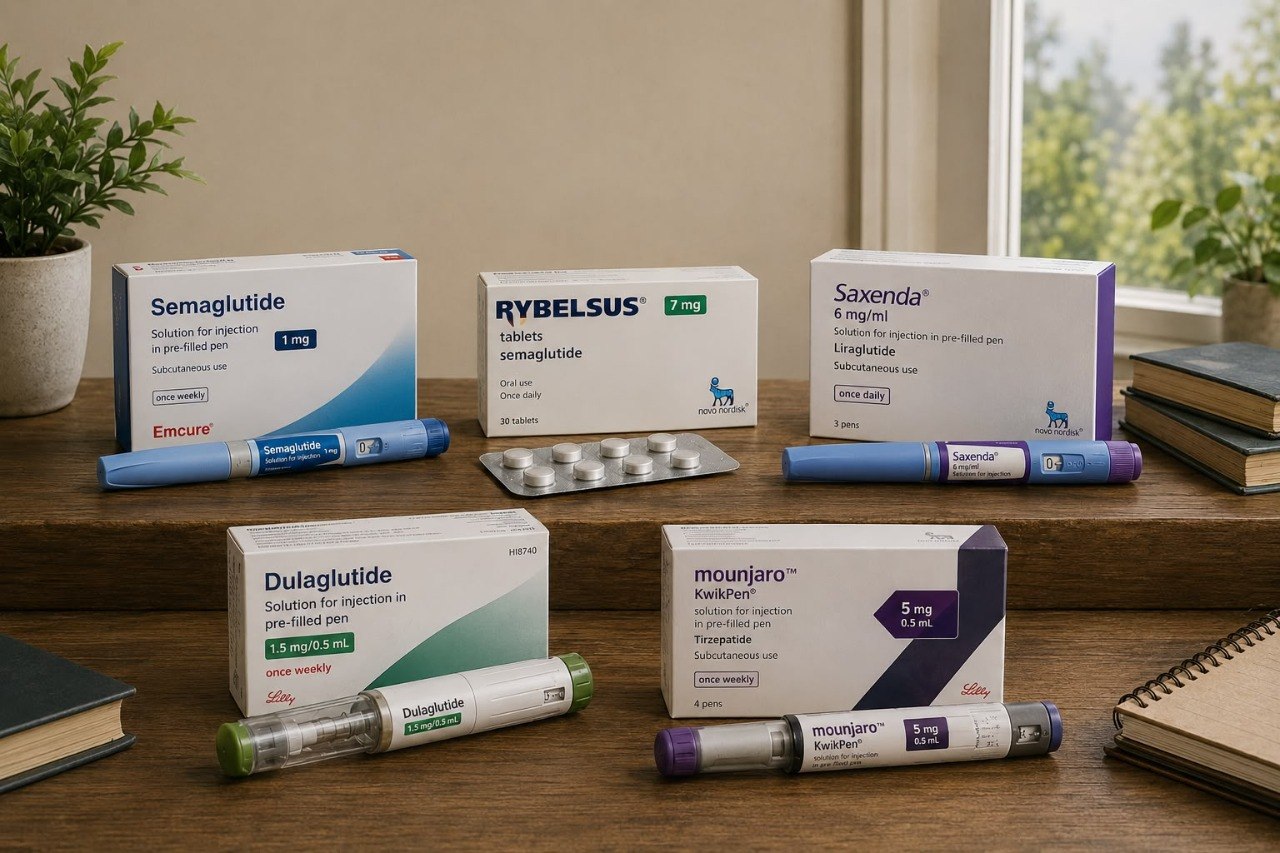
If you are comparing GLP-1 medicines in India in 2026, the market now splits in a useful way. Semaglutide became dramatically cheaper after its patent expired in March: Indian products now start around ₹1,290 a month, while branded Wegovy starts at ₹5,660 for four weekly 0.25 mg doses after Novo Nordisk's latest cut.1,2 Tirzepatide (Mounjaro) still produces more weight loss on average. Apollo Pharmacy currently lists the four-dose KwikPen at ₹13,125–₹25,781 before retailer-specific discounts, depending on dose; Tata 1mg lists discounted prices as low as ₹11,537 for 2.5 mg and about ₹23,977 for the 12.5–15 mg pens.3,4
Those figures change the decision. A 100 kg person looking only at trial averages may favour tirzepatide because its head-to-head weight loss was greater. The same person may reach a different answer if ₹20,000 a month is realistic for three months but not for twelve. In a consultation, I would settle that practical question early, because a treatment plan has to survive contact with the patient's actual life.
The decision in one view
- Lowest-cost route. Generic semaglutide: from about ₹1,290/month for a multi-dose vial; pre-filled pens start higher.1
- Branded semaglutide. Wegovy 0.25 mg: ₹1,415/week after the March 2026 cut; 0.5 mg ₹2,025/week; 1 mg ₹2,275/week.2
- Greatest average weight loss. Tirzepatide beat semaglutide directly in SURMOUNT-5: 20.2% vs 13.7% at 72 weeks.5
- Long-term evidence. Semaglutide: placebo-controlled cardiovascular benefit in obesity via SELECT plus dedicated kidney outcomes via FLOW. Tirzepatide: SURPASS-CVOT established cardiovascular noninferiority versus dulaglutide in type 2 diabetes with ASCVD.6,7,8
Before you compare two quotes, ask three things: Is this price for one weekly dose or a month? Is it a vial or a pen? Which strength is being priced? Those three details explain a large share of the confusing numbers online. Write the monthly cost beside the strength you expect to stay on; the starter price is rarely the full-year price.
What do GLP-1 medications cost in India in 2026? Copy link
The cheapest licensed semaglutide products are now around ₹1,290 a month, branded Wegovy starts at ₹5,660 for four weekly starter doses, and Apollo Pharmacy currently lists Mounjaro's four-dose KwikPen at ₹13,125–₹25,781 before retailer-specific discounts, depending on strength.1,2,3
Semaglutide's Indian patent lapsed on 20 March 2026. Within days, at least half a dozen Indian companies had launched versions of the molecule, and Reuters reported treatment costs up to about 70% below the originator in some cases.1 Eleven days after the patent expiry, Novo Nordisk cut Ozempic and Wegovy prices again, by as much as 36% and 48% respectively.2
| Product / maker | Format / use | Reported price |
|---|---|---|
| Sundae — Eris | Multi-dose vial | from ₹1,290/month |
| GLIPIQ — Glenmark | Vial | ₹1,300–1,760/month |
| Semasize / Obesema / Hepaglide — Alkem | Pre-filled pen | from ₹1,800/month |
| Semaglyn / Mashema / Alterme — Zydus | Reusable pen | ≈₹2,200/month |
| Obeda — Dr Reddy's | Disposable pen; diabetes launch | ≈₹4,200/month |
| Noveltreat — Sun Pharma | Weight-management semaglutide, 0.25–2.4 mg | ₹900–2,000/week |
| Sembolic / Semalix — Torrent | Injectable pen; oral tablet also launched | injectable from ₹3,999/month |
| Wegovy — Novo Nordisk | 0.25 / 0.5 / 1 mg weekly doses; March 2026 reported prices for these three of its five strengths | ₹1,415 / ₹2,025 / ₹2,275 per week |
Mounjaro sits in a different price tier because tirzepatide does not yet have a comparable generic market in India. Apollo Pharmacy currently lists the four-dose KwikPen at ₹13,125 for 2.5 mg, ₹16,406 for 5 mg, ₹20,625 for 7.5–10 mg and ₹25,781 for 12.5–15 mg before any retailer-specific discount.3 Tata 1mg currently lists the same 2.5 mg pen at ₹11,537 and the 12.5–15 mg pens at about ₹23,977.4 If you have compared pharmacy quotes in India before, you will recognise the pattern, of course: the same pack can move by thousands of rupees between retailers. Check the exact strength, pack size and final checkout price on the day you buy. Availability moves too. In July, Dr Reddy’s halted fresh semaglutide production after an impurity turned up while manufacturing was being scaled, and the company does not expect normal Indian supply again before late October; Torrent and USV have meanwhile pulled selected Semalix and Usema batches as a precaution.9 Match the batch number on the carton to the bill, and ask the counter what is actually in stock this month, not what the price list says.
What are GLP-1 medications? Copy link
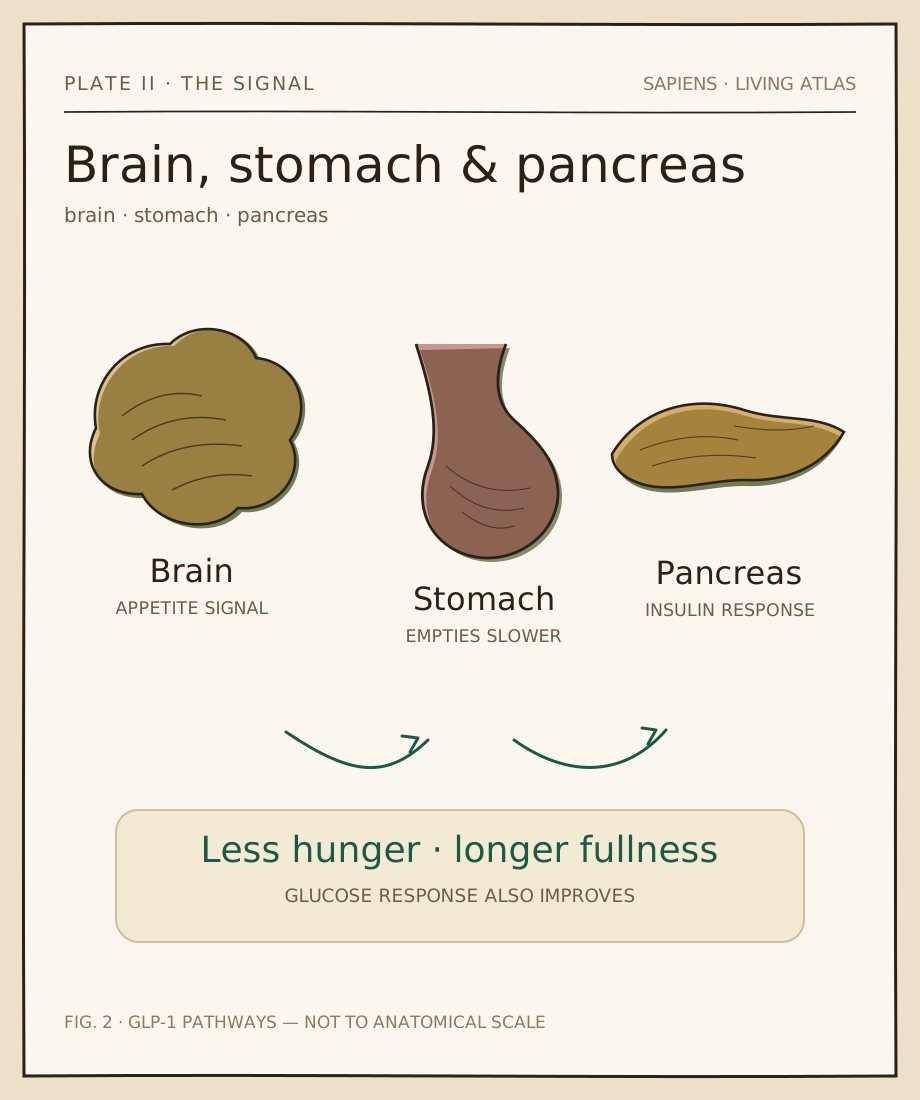
GLP-1 medicines copy a hormone signal released after eating. They reduce appetite, slow stomach emptying and improve glucose-dependent insulin secretion, making a sustained calorie deficit easier for many people.
GLP-1 stands for glucagon-like peptide-1. Your gut releases it after a meal; the signal reaches appetite centres in the brain, the stomach and the pancreas. Natural GLP-1 is short-lived. Medicines such as semaglutide are engineered to activate the receptor much longer, which turns a brief meal signal into a steady therapeutic effect.
Most of us first meet these medicines through brand names, and that is where the category gets blurred. Ozempic and Wegovy are both semaglutide. Mounjaro is tirzepatide, which activates GIP and GLP-1 receptors. Rybelsus is oral semaglutide. The molecule tells you more about the pharmacology than the logo on the box.
Semaglutide, tirzepatide and the brand names Copy link
| Brand | Molecule | Form | Why the distinction matters |
|---|---|---|---|
| Ozempic | Semaglutide | Weekly injection | India's diabetes product. See Ozempic in India. |
| Wegovy | Semaglutide | Weekly injection | Weight-management dose range, reaching 2.4 mg. See Wegovy in India. |
| Rybelsus | Semaglutide | Daily tablet | Daily tablet in 3, 7 and 14 mg strengths, taken on an empty stomach. |
| Mounjaro | Tirzepatide | Weekly injection | Dual GIP/GLP-1 agonist. See Mounjaro in India. |
| Yurpeak | Tirzepatide | Weekly injection | The second Lilly tirzepatide brand; Cipla holds the rights to distribute and promote it in India.10 |
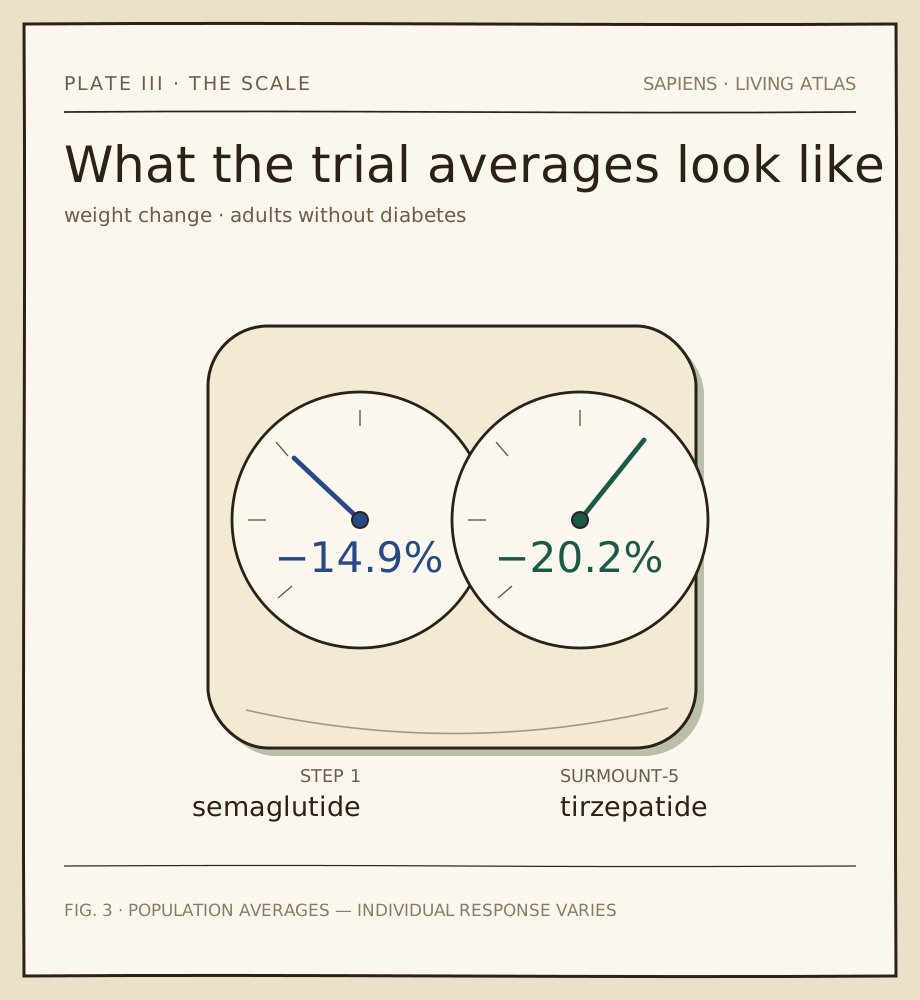
Ozempic and Wegovy contain the same active molecule, but dose range and approved use differ. This matters whenever someone quotes “15% weight loss from Ozempic”: the 14.9% STEP 1 result came from semaglutide 2.4 mg, the obesity dose used in Wegovy's clinical programme.11
The other GLP-1 medicines: Rybelsus, Trulicity, Victoza and Saxenda Copy link
Semaglutide and tirzepatide dominate the 2026 decision, but the class is wider: oral semaglutide tablets, weekly dulaglutide, daily liraglutide and the older exenatide all remain on Indian shelves.
Rybelsus is semaglutide as a once-daily tablet, in 3, 7 and 14 mg strengths, taken on an empty stomach with a small sip of water. In India, Rybelsus and its 3, 7 and 14 mg oral semaglutide counterparts provide a non-injectable semaglutide option for their approved indications, and since the patent expiry the tablet has gone generic too: Torrent launched oral semaglutide alongside its injectable in March.1 The tablet shelf, with current prices, sits inside the generic semaglutide guide. One thing to be clear about: tirzepatide has no tablet form anywhere in the world. Anything sold as a "tirzepatide tablet" is not a licensed product.
Dulaglutide, sold as Trulicity, is a weekly injection for type 2 diabetes with cardiovascular benefit demonstrated in its own outcomes trial; that record is precisely why it was chosen as the active comparator tirzepatide had to match in SURPASS-CVOT.8 Liraglutide is a daily injection, as Victoza for diabetes and Saxenda for weight management. In its landmark obesity trial, liraglutide 3.0 mg produced 8.0% average weight loss at 56 weeks against 2.6% with placebo, respectable in 2015, and roughly half of what semaglutide later achieved.12 Exenatide, the class pioneer, is now rarely the answer to any new prescription.
What exists elsewhere in the world
The molecules are global; the shelves are not. Tirzepatide sells in the United States as Zepbound for weight management and Mounjaro for diabetes, while semaglutide keeps the Ozempic, Wegovy and Rybelsus names almost everywhere. The formulation frontier is oral: a 25 mg daily semaglutide tablet built for weight management produced 13.6% average loss at 64 weeks in its phase 3 trial, a result in the territory of the injectable trials, and is reaching Western markets ahead of India.13 What is on an Indian counter today is the shelf this page describes; what is on an American one is not a promise about next year here.
What is coming next
Two late-stage candidates matter most for India, because both would change the price-and-format map this page is built on. Orforglipron is a small-molecule GLP-1 taken as a once-daily pill with no food or water restrictions. Its phase 3 obesity trial produced 11.2% average loss at the highest dose over 72 weeks, 12.4% among those who stayed on treatment, and a small molecule is far cheaper to manufacture at scale than a peptide.14 CagriSema pairs semaglutide with the amylin analogue cagrilintide: 20.4% average loss at 68 weeks in its phase 3 trial, 22.7% among participants who adhered to treatment.15 Behind them sit triple-agonist and amylin-based candidates still in trials. None of these is available in India, no Indian price exists for any of them, and trial results are not launch dates. Choose from the 2026 shelf, and let the pipeline be a reason for optimism rather than a reason to wait.
So why does this page spend its length on two molecules? Because in practice the 2026 Indian decision has collapsed to them: semaglutide holds the price floor and the broadest outcomes evidence, tirzepatide holds the efficacy ceiling, and the older drugs are chosen mainly when a specific history, a tolerability problem or a needle refusal points away from both.
How much weight can you lose? Copy link
Average trial loss is about 15% with semaglutide 2.4 mg and up to about 21% with tirzepatide at the higher doses. A direct trial also found greater average loss with tirzepatide.
Semaglutide: STEP 1
STEP 1 enrolled 1,961 adults with obesity, or overweight plus a weight-related condition, without diabetes. Alongside lifestyle support, semaglutide 2.4 mg produced 14.9% average weight loss at 68 weeks, compared with 2.4% with placebo.11
Tirzepatide: SURMOUNT-1
SURMOUNT-1 enrolled 2,539 adults with obesity or overweight plus a weight-related complication, without diabetes. At 72 weeks, average weight change was −15.0% at 5 mg, −19.5% at 10 mg and −20.9% at 15 mg, compared with −3.1% on placebo.16
The direct comparison: SURMOUNT-5
Cross-trial comparisons are useful for orientation; a randomised head-to-head trial is stronger evidence for “which loses more?” SURMOUNT-5 randomised 751 adults with obesity and without diabetes to maximum tolerated tirzepatide or semaglutide. At 72 weeks, average loss was 20.2% with tirzepatide and 13.7% with semaglutide.5 The study was open-label and funded by Eli Lilly. For the rupee-by-rupee version of this comparison, see Mounjaro vs Wegovy.
Is generic semaglutide the same as Ozempic or Wegovy? Copy link
A licensed generic contains semaglutide as the active drug. The device, formulation, concentration, labelled indication and product-specific manufacturing history can still differ.
This distinction becomes concrete at the pharmacy. A multi-dose vial asks you to measure a prescribed volume with a syringe; a pre-filled pen meters the dose through its device. Two products can contain semaglutide and still require different handling. Some Indian launches carry diabetes indications, some weight-management indications, and the available strengths differ by manufacturer.1
Use this checklist before accepting a substitution: molecule, concentration, strength, formulation, device, labelled indication and manufacturer. The generic semaglutide guide maps the full 2026 shelf, maker by maker, price by price, licence by licence. Buy through a regulated pharmacy and make sure the product was stored and transported within the manufacturer’s permitted temperature range. Storage allowances differ by formulation and device, and oral semaglutide is not a cold-chain product. If a seller cannot clearly identify those basics, the low price is not enough information to make a safe decision.
Who are GLP-1 weight-loss medicines for? Copy link
Weight-management labels commonly use a BMI of 30 kg/m² or above, or 27 kg/m² or above with at least one weight-related condition. India's 2025 obesity framework adds an important population-level nuance: Asian Indians develop cardiometabolic disease at lower BMI and waist measures, so risk staging incorporates adiposity and clinical consequences rather than BMI alone.17
Do not turn that Indian diagnostic framework into an automatic prescription threshold. A doctor still needs the product's approved indication, your medical history and the reason treatment is being considered. How eligibility, baseline labs, titration and monitoring fit together as one supervised programme is mapped in the weight loss treatment in India guide. And where the weight gain itself has no explanation, the thyroid-and-weight chapter deserves a read before any injection.
A useful assessment covers BMI and waist circumference, blood pressure, glucose status, lipids, fatty liver or other metabolic disease, current medicines, previous weight-loss attempts, pregnancy plans where relevant, contraindications and the practical ability to continue treatment.
What are the side effects and serious risks? Copy link
Nausea, diarrhoea, vomiting, constipation and early fullness are the common problems. Severe abdominal pain, persistent vomiting with dehydration, gallbladder symptoms or sudden vision change deserve prompt medical assessment.
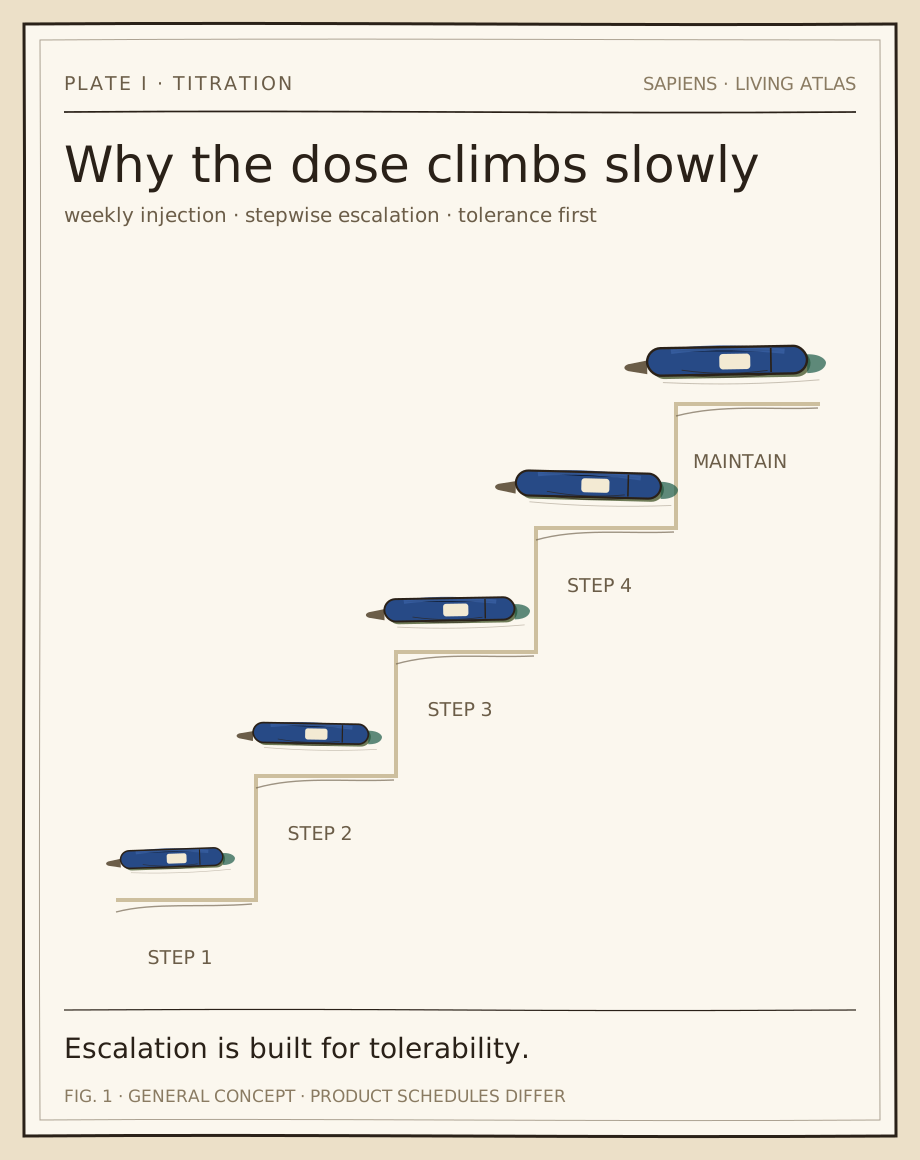
Gastrointestinal effects tend to cluster around starting treatment and stepping the dose up. That is why dose escalation is deliberately slow. If the current step is rough, tell the prescribing doctor before the next increase. Smaller meals, stopping as soon as hunger is gone and avoiding very fatty meals often make the early weeks easier.
For semaglutide specifically, European regulators concluded in 2025 that non-arteritic anterior ischaemic optic neuropathy (NAION) is a very rare side effect, meaning up to 1 in 10,000 users. Sudden loss of vision or rapidly worsening eyesight warrants urgent review; confirmed NAION is a reason to stop semaglutide.18
The current Wegovy and Mounjaro prescribing information also lists a personal history, or a family history, of medullary thyroid carcinoma or MEN2 as a contraindication. Both labels make the same key point: thyroid C-cell tumours occur in rodents, while the relevance to humans is unknown.19,20 Indian brand labelling should be checked for the specific product being prescribed.
For a deeper numerical treatment of semaglutide adverse effects, see Ozempic side effects.
How much muscle do you lose? Copy link
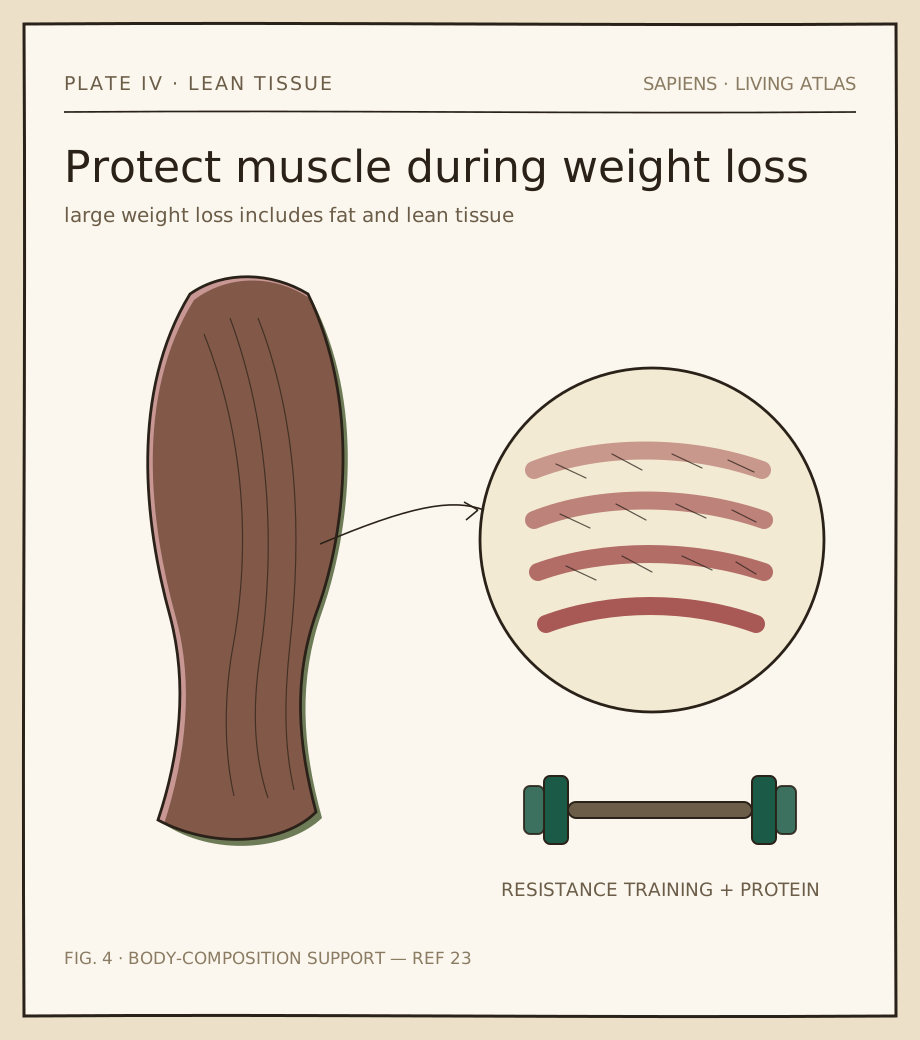
Large weight loss reduces some lean tissue as well as fat. “Lean mass” is broader than skeletal muscle, so a fixed claim such as “30% of GLP-1 weight loss is muscle” overstates what body-composition studies can tell us.
In the STEP 1 DXA substudy, semaglutide reduced total fat mass by 19.3% and lean body mass by 9.7%; because fat fell faster, lean mass increased as a proportion of total body weight.21 In the SURMOUNT-1 DXA substudy, Look and colleagues reported that roughly 75% of the weight lost with tirzepatide was fat mass and about 25% lean mass, with broadly similar proportional partitioning in placebo-treated participants who lost weight.22
Protect the part you can influence. Set a protein target you can actually eat, perform progressive resistance training and avoid forcing the rate of weight loss faster simply because appetite has disappeared. A 2025 joint advisory from the American College of Lifestyle Medicine, American Society for Nutrition, Obesity Medicine Association and The Obesity Society specifically recommends nutritional management and resistance training to help preserve muscle and bone during GLP-1 treatment.23 The short answer for protecting muscle has three parts: protein, resistance, patience. Put two or three fixed strength sessions into the week before appetite suppression makes under-eating feel effortless. A person who is eating half their old calories and skipping strength work can become lighter and weaker at the same time.
Can GLP-1 medications cause hair loss? Copy link
Hair shedding has been reported with semaglutide and tirzepatide. Rapid weight loss, reduced intake and nutritional shortfalls are plausible contributors, particularly through telogen effluvium, but current evidence cannot cleanly separate weight-loss effects from a drug-specific effect.24
A 2026 systematic review found hair-loss signals across GLP-1 therapies, with semaglutide and tirzepatide among the drugs most often associated with reports; telogen effluvium and androgenetic alopecia were the commonest subtypes described.24 Observational and pharmacovigilance data can detect a signal, but they do not prove that the molecule itself caused the shedding.
If hair fall begins a few months into rapid weight loss, look for the pattern and for correctable contributors: protein intake, iron status, thyroid disease and vitamin D. Sapiens' thyroid-and-hair-loss guide explains diffuse shedding, and the telogen effluvium guide walks the shed’s timeline from trigger to regrowth. Persistent shedding, scalp inflammation or patterned thinning deserves a separate hair assessment.
What happens when you stop? Copy link
Appetite often returns and weight regain is common. In the STEP 1 extension, participants regained about two-thirds of their prior semaglutide-associated weight loss during the year after treatment ended.25
The same extension found that cardiometabolic improvements moved back toward baseline as weight returned.25 That is why I would discuss the exit before the first dose: Are you planning long-term treatment? What happens if cost becomes the limiting factor? What would make us reduce, switch or stop?
Protein, resistance training and sustainable eating habits remain valuable. The withdrawal data do not show that good habits reliably erase the biological rebound after medication is removed, so it is better to promise less and plan more.
What should be checked before starting? Copy link
There is no universal giant “GLP-1 blood panel.” Testing should answer clinical questions and give you useful baselines.
| Measure / test | What it answers |
|---|---|
| HbA1c / glucose | Is diabetes or prediabetes already present, and how does that change treatment? |
| Lipid profile | What is the baseline cardiometabolic risk, including triglycerides? |
| Kidney function | What baseline will you compare with if vomiting or dehydration becomes significant? |
| Liver enzymes | Is fatty liver or another liver problem part of the metabolic picture? |
| Thyroid function | Do symptoms or history suggest thyroid disease contributing to weight change? |
| CBC / iron studies when indicated | Is anaemia or iron deficiency relevant, especially with fatigue or hair shedding? |
The full body checkup guide explains how these common tests fit together without treating every abnormal number as a diagnosis.
Which GLP-1 medication should you choose? Copy link
Start with the disease being treated, then work outward to efficacy, outcomes evidence, safety, format and cost.
If maximum average weight loss is the priority, tirzepatide currently leads the direct comparison.5 If affordability is the constraint, India's 2026 generic semaglutide market changes the calculation substantially.1 Cardiovascular evidence now exists for both molecules, but the trial questions differ.
For semaglutide, SELECT was a placebo-controlled cardiovascular outcomes trial in 17,604 adults with overweight or obesity, established cardiovascular disease and no diabetes; semaglutide 2.4 mg reduced major cardiovascular events by 20% relative to placebo.6 FLOW separately showed a 24% lower risk of its kidney/cardiovascular composite in people with type 2 diabetes and chronic kidney disease.7
For tirzepatide, SURPASS-CVOT studied more than 13,000 people with type 2 diabetes and established atherosclerotic cardiovascular disease. Tirzepatide was noninferior to dulaglutide for cardiovascular death, myocardial infarction or stroke: HR 0.92, 95.3% CI 0.83–1.01.8 A 2026 post-hoc analysis reported a broader cardiorenal composite HR of 0.84 versus dulaglutide.26 That is meaningful outcome evidence, but it answers a different question from placebo-controlled morbidity/mortality testing in obesity without diabetes.
One more decision hides inside the first: switching. There is no validated milligram-for-milligram conversion between semaglutide and tirzepatide. When switching molecules, the dose and timing of the new medicine are prescribing decisions that depend on the product label, prior treatment, tolerability, time since the last dose and the patient’s clinical context. For treatment initiation, the labelled starting doses are 0.25 mg weekly for Wegovy injection and 2.5 mg weekly for Mounjaro.19,20 As you would expect, the common 2026 direction is downward on cost: tirzepatide to generic semaglutide when ₹20,000 a month stops being sustainable. Same-molecule brand switches follow different, simpler rules, covered in the generic semaglutide guide.
Write the choice down as a sentence: “I am choosing this molecule because ____; I can sustain the expected monthly cost of ____; and we will judge whether it is working by ____.” If those blanks are vague, the plan needs more work before the prescription.
Frequently asked questions Copy link
How much do GLP-1 medications cost in India?
As of 2026, generic semaglutide starts around ₹1,290 a month for a multi-dose vial, with pen products starting higher. After Novo's March cut, Wegovy's 0.25 mg dose is ₹1,415 a week, or ₹5,660 for four weeks. Apollo Pharmacy currently lists Mounjaro's four-dose KwikPen at ₹13,125–₹25,781 a month before retailer-specific discounts, depending on strength; Tata 1mg's discounted listings run lower. Always check whether a quote is per week, per month, per vial or per pen.
How much weight can you lose on GLP-1 medication?
Semaglutide 2.4 mg produced 14.9% average loss at 68 weeks in STEP 1. Tirzepatide produced 15.0–20.9% depending on dose at 72 weeks in SURMOUNT-1. In the direct SURMOUNT-5 trial, tirzepatide produced 20.2% versus 13.7% with semaglutide.
Is Mounjaro better than semaglutide for weight loss?
For average weight loss, the direct evidence favours tirzepatide. The overall choice also depends on other diseases, tolerability, format and cost. In India, generic semaglutide is now much cheaper than tirzepatide.
Are generic semaglutide medicines as good as Ozempic or Wegovy?
A licensed generic uses semaglutide as the active drug, but products can differ in device, formulation, concentration, strengths and labelled indication. Confirm the exact product and use it according to the prescribing plan for that formulation.
Do GLP-1 medications cause muscle loss?
Large weight loss usually includes some lean tissue. Lean mass is not identical to skeletal muscle. Protein intake and resistance training help protect strength and muscle during treatment.
Do you have to take GLP-1 medication forever?
No fixed duration applies to everyone. Obesity often behaves as a chronic disease, and substantial regain after stopping semaglutide has been demonstrated. Discuss long-term treatment and the exit plan before starting.
Can you increase GLP-1 naturally?
Your gut already releases GLP-1 after every meal, and protein, fibre and whole foods stimulate that release somewhat more than refined carbohydrate. The effect is real, brief and meal-sized. It does not approach what a prescription molecule does, because drugs like semaglutide are engineered to activate the receptor continuously for days, not minutes. Eat protein and fibre for their own sake; do not expect them to substitute for treatment where treatment is indicated.
Can GLP-1 medication cause hair loss?
Rapid weight loss can trigger telogen effluvium, a temporary diffuse shed. Thyroid disease, iron deficiency and other causes can occur at the same time, so persistent shedding deserves an assessment of its own.
References Copy link
- Reuters. Indian drugmakers flood market with cheaper versions of Novo's Ozempic, Wegovy. 23 Mar 2026. Reports the post-patent Indian launches and prices: Eris Sundae from ₹1,290/month; Glenmark GLIPIQ ₹1,300–1,760/month; Alkem pens from ₹1,800/month; Zydus about ₹2,200/month; Dr Reddy's Obeda about ₹4,200/month; Sun Noveltreat ₹900–2,000 per weekly treatment. Source.
- Reuters. Novo Nordisk cuts Ozempic, Wegovy prices in India again to fight cheaper generics. 31 Mar 2026, updated 3 Apr 2026. Semaglutide patent expiry 20 Mar; Wegovy cuts up to 48%; 0.25 mg ₹1,415/week, 0.5 mg ₹2,025/week, 1 mg ₹2,275/week. Source.
- Apollo Pharmacy. Mounjaro KwikPen product listings. Accessed 9 Aug 2026. Apollo lists ₹13,125 for the 2.5 mg four-dose KwikPen, ₹16,406 for 5 mg, ₹20,625 for 7.5–10 mg and ₹25,781 for 12.5–15 mg before retailer-specific offers. Apollo Pharmacy.
- Tata 1mg. Mounjaro brand listings. Accessed 9 Aug 2026. Lists retailer-discounted prices including ₹11,537 for the 2.5 mg KwikPen and about ₹23,977 for the 12.5 mg and 15 mg KwikPens, below the corresponding ₹13,125 and ₹25,781 list prices. Tata 1mg.
- Aronne LJ, Horn DB, le Roux CW, et al. Tirzepatide as Compared with Semaglutide for the Treatment of Obesity. N Engl J Med. 2025;393(1):26–36. doi:10.1056/NEJMoa2416394. SURMOUNT-5: 751 adults with obesity and without diabetes; −20.2% with tirzepatide vs −13.7% with semaglutide at 72 weeks. Open-label; funded by Eli Lilly. PubMed.
- Lincoff AM, Brown-Frandsen K, Colhoun HM, et al. Semaglutide and Cardiovascular Outcomes in Obesity without Diabetes. N Engl J Med. 2023;389(24):2221–2232. doi:10.1056/NEJMoa2307563. SELECT: 17,604 adults with overweight/obesity and established cardiovascular disease; 20% relative reduction in major cardiovascular events. NEJM.
- Perkovic V, Tuttle KR, Rossing P, et al. Effects of Semaglutide on Chronic Kidney Disease in Patients with Type 2 Diabetes. N Engl J Med. 2024;391:109–121. doi:10.1056/NEJMoa2403347. FLOW: 24% lower risk of the primary kidney/cardiovascular composite with semaglutide. NEJM.
- Nicholls SJ, Pavo I, Bhatt DL, et al.; SURPASS-CVOT Investigators. Cardiovascular Outcomes with Tirzepatide versus Dulaglutide in Type 2 Diabetes. N Engl J Med. 2025;393:2409–2420. doi:10.1056/NEJMoa2505928. SURPASS-CVOT: more than 13,000 people with type 2 diabetes and atherosclerotic cardiovascular disease; tirzepatide was noninferior to dulaglutide for cardiovascular death, myocardial infarction or stroke (HR 0.92; 95.3% CI 0.83–1.01). PubMed.
- Medical Dialogues. Recalls by Dr Reddy’s, Torrent put spotlight on quality standards in India’s semaglutide market. July 2026. Reports Dr Reddy’s halting new semaglutide manufacturing after an impurity was detected during production scale-up, with Indian supply disruption expected until at least late October 2026, and voluntary recalls of selected Semalix and Usema batches by Torrent and USV. Medical Dialogues.
- Cipla Limited. Cipla launches Yurpeak® (tirzepatide) for the treatment of Obesity and Type 2 Diabetes. Press release, 10 Dec 2025. Cipla holds the rights to distribute and promote Yurpeak, the second brand of Lilly’s tirzepatide in India after DCGI approval; KwikPen device in six strengths from 2.5 to 15 mg. Cipla.
- Wilding JPH, Batterham RL, Calanna S, Davies M, Van Gaal LF, Lingvay I, et al. Once-Weekly Semaglutide in Adults with Overweight or Obesity. N Engl J Med. 2021;384(11):989–1002. doi:10.1056/NEJMoa2032183. STEP 1: 1,961 adults; mean weight change −14.9% vs −2.4% at 68 weeks. PubMed.
- Pi-Sunyer X, Astrup A, Fujioka K, Greenway F, Halpern A, Krempf M, et al.; SCALE Obesity and Prediabetes NN8022-1839 Study Group. A Randomized, Controlled Trial of 3.0 mg of Liraglutide in Weight Management. N Engl J Med. 2015;373(1):11–22. doi:10.1056/NEJMoa1411892. At 56 weeks, mean weight loss was 8.0% with liraglutide 3.0 mg versus 2.6% with placebo. NEJM.
- Wharton S, Lingvay I, Bogdanski P, et al. Oral Semaglutide at a Dose of 25 mg in Adults with Overweight or Obesity. N Engl J Med. 2025;393(11):1077–1087. doi:10.1056/NEJMoa2500969. OASIS 4: mean weight change −13.6% at 64 weeks with daily oral semaglutide 25 mg, against placebo. NEJM.
- Wharton S, Aronne LJ, Stefanski A, et al.; ATTAIN-1 Trial Investigators. Orforglipron, an Oral Small-Molecule GLP-1 Receptor Agonist for Obesity Treatment. N Engl J Med. 2025;393(18):1796–1806. doi:10.1056/NEJMoa2511774. ATTAIN-1: mean weight change −11.2% at 36 mg versus −2.1% with placebo at 72 weeks; −12.4% by the efficacy estimand. PubMed.
- Garvey WT, Blüher M, Osorto Contreras CK, et al.; REDEFINE 1 Study Group. Coadministered Cagrilintide and Semaglutide in Adults with Overweight or Obesity. N Engl J Med. 2025;393(7):635–647. doi:10.1056/NEJMoa2502081. REDEFINE 1: mean weight change −20.4% versus −3.0% with placebo at 68 weeks (treatment-policy estimand); −22.7% by the trial-product estimand. PubMed.
- Jastreboff AM, Aronne LJ, Ahmad NN, Wharton S, Connery L, Alves B, et al. Tirzepatide Once Weekly for the Treatment of Obesity. N Engl J Med. 2022;387(3):205–216. doi:10.1056/NEJMoa2206038. SURMOUNT-1: mean weight changes −15.0%, −19.5% and −20.9% at 5, 10 and 15 mg. PubMed.
- Misra A, Vikram NK, Ghosh A, Ranjan P, Gulati S, et al.; India Obesity Commission Members. Revised definition of obesity in Asian Indians living in India. Diabetes Metab Syndr. 2025;19(1):102989. doi:10.1016/j.dsx.2024.102989. Provides the two-stage Indian obesity framework incorporating adiposity and clinical consequences. PubMed.
- European Medicines Agency, Pharmacovigilance Risk Assessment Committee. PRAC concludes eye condition NAION is a very rare side effect of semaglutide medicines Ozempic, Rybelsus and Wegovy. 6 Jun 2025. Classifies NAION as very rare, up to 1 in 10,000; recommends urgent review for sudden vision loss and stopping semaglutide if NAION is confirmed. EMA.
- U.S. Food and Drug Administration / Novo Nordisk. Wegovy (semaglutide) Prescribing Information. Current 2026 label. Contraindicates Wegovy in personal/family MTC or MEN2; notes rodent C-cell tumour findings and uncertain human relevance. FDA label.
- Eli Lilly and Company. Mounjaro (tirzepatide) US Prescribing Information. 2026. Contraindicates use in personal/family MTC or MEN2; human relevance of rodent C-cell tumours remains unknown. Prescribing information.
- Wilding JPH, Batterham RL, Calanna S, Van Gaal LF, McGowan BM, Rosenstock J, et al. Impact of Semaglutide on Body Composition in Adults With Overweight or Obesity: Exploratory Analysis of the STEP 1 Study. J Endocr Soc. 2021;5(Suppl 1):A16–A17. doi:10.1210/jendso/bvab048.030. DXA substudy: total fat mass −19.3%, lean body mass −9.7%, with improvement in lean-mass proportion. PMC.
- Look M, Dunn JP, Kushner RF, Cao D, Harris C, Gibble TH, et al. Body composition changes during weight reduction with tirzepatide in the SURMOUNT-1 study of adults with obesity or overweight. Diabetes Obes Metab. 2025;27(5):2720–2729. doi:10.1111/dom.16275. DXA substudy: approximately 75% of tirzepatide-associated weight loss was fat mass and 25% lean mass. PubMed.
- Mozaffarian D, Agarwal M, Aggarwal M, et al. Nutritional priorities to support GLP-1 therapy for obesity: a joint Advisory from the American College of Lifestyle Medicine, the American Society for Nutrition, the Obesity Medicine Association, and The Obesity Society. Am J Clin Nutr. 2025;122:344–367. Recommends structured nutritional care plus resistance training to preserve muscle and bone during GLP-1 treatment. PMC.
- Gupta AK, Teasell EM, Economopoulos V, Mirmirani P. GLP-1 therapies and hair loss: A systematic review of current evidence and implications for counseling. Science Progress. 2026;109(2):368504261444578. doi:10.1177/00368504261444578. Twenty-four studies were included; hair-loss signals were reported with GLP-1 therapies, with semaglutide and tirzepatide prominent in the available evidence, while causality and mechanism remain uncertain. Journal.
- Wilding JPH, Batterham RL, Davies M, et al. Weight regain and cardiometabolic effects after withdrawal of semaglutide: the STEP 1 trial extension. Diabetes Obes Metab. 2022;24(8):1553–1564. doi:10.1111/dom.14725. Participants regained roughly two-thirds of prior weight loss during the year after treatment withdrawal. PubMed.
- Nissen SE, Wolski K, D'Alessio D, Weerakkody G, Kiljanski J, Wiese RJ, et al. Cardiorenal Outcomes With Tirzepatide Compared With Dulaglutide in Patients With Diabetes and Cardiovascular Disease: A Post Hoc Analysis of the SURPASS-CVOT Randomized Clinical Trial. JAMA Cardiol. 2026;11(6):544–552. doi:10.1001/jamacardio.2026.0767. The six-component cardiorenal composite occurred less often with tirzepatide (HR 0.84; 95% CI 0.79–0.90); this was a post-hoc analysis. PubMed.
This article is educational and does not replace personalised medical advice. GLP-1-based medicines are prescription treatments. Do not start, stop, switch products or change doses without a clinician who knows your medical history. Prices are a snapshot dated to the cited March and August 2026 sources. They change frequently, and they vary by dose, format, city, pharmacy and retailer discount, so verify the current figure before purchase. Report an error on this page.