Sapiens · Weight
Weight Loss Injections in India: Eligibility, and Who They Are Actually For
Three frameworks shape whether you can be prescribed a weight loss injection in India, and they do not carry the same weight. The product licence defines on-label use: a BMI of 30, or 27 with a weight-related condition. The Endocrine Society of India's 2025 guideline sets the clinical threshold for medicines: 27, or 25 with a condition. And the 2025 Indian obesity consensus adds a staging system that starts obesity at a BMI above 23 and then looks at your waist and your complications. Which of the three your doctor leans on tells you a great deal about how the decision actually gets made, and this page walks through all of them.
The short answer, before the detail: a weight loss injection is a prescription medicine from the GLP-1 family, given once a week (or once a day for the older one), that lowers appetite and slows the stomach. It is meant for adults whose weight is already harming their health, judged by an appropriately qualified prescriber after a proper assessment and blood tests. In the trials that got these medicines licensed, people lost between roughly 8% and 21% of their body weight over a year or more, depending on the molecule and the dose, and most of it came back within a year of stopping. None of that is a reason not to take one. It is the frame you need before you decide.
What is a weight loss injection? Copy link
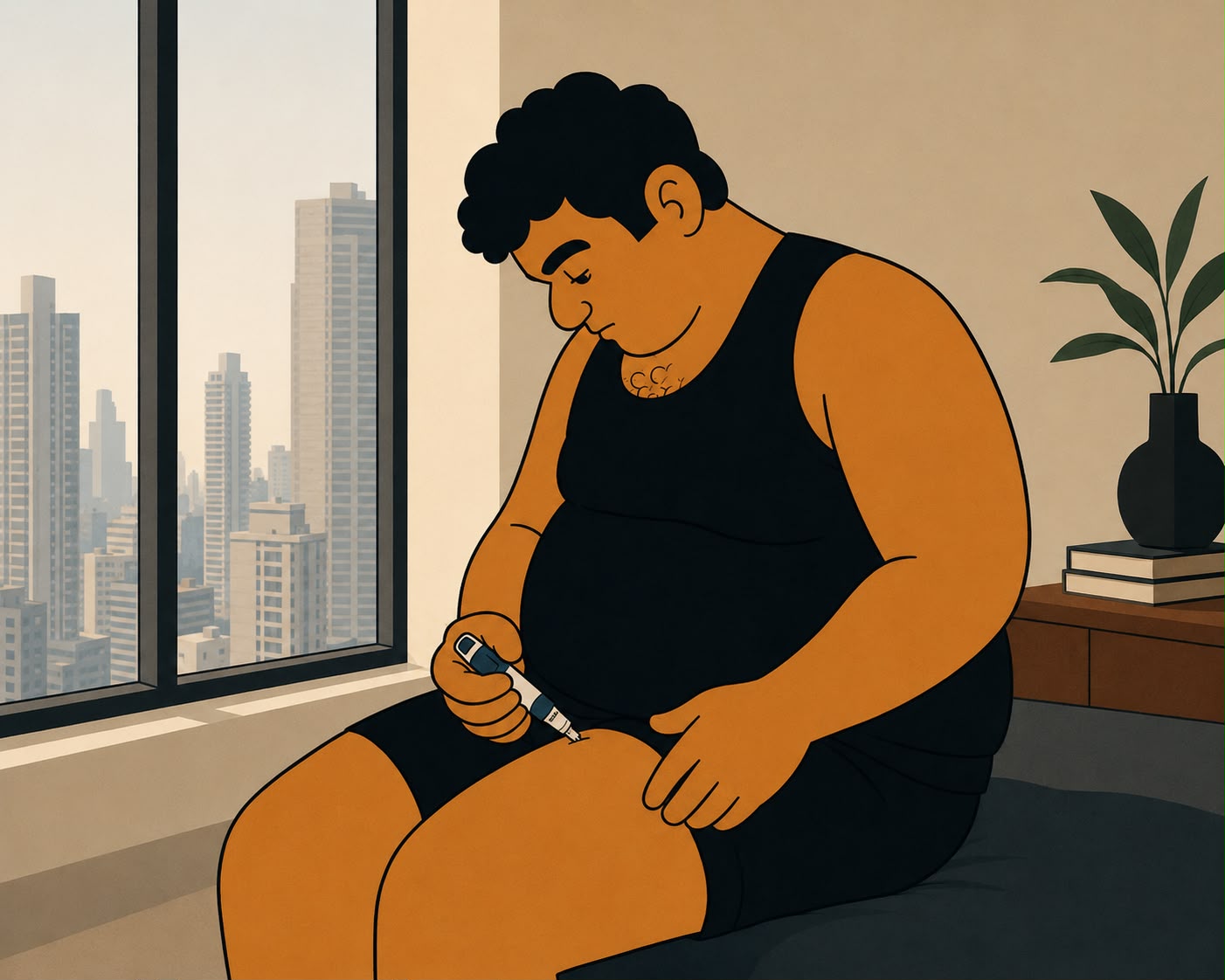
A weight loss injection is a prescription medicine that copies one or two of the gut hormones your body releases after a meal. The hormone is called GLP-1 (glucagon-like peptide-1), and the medicines are GLP-1 receptor agonists. One of them, tirzepatide, also copies a second hormone, GIP. You inject a small dose under the skin of the abdomen, thigh or upper arm with a pre-filled pen, once a week for semaglutide and tirzepatide, once a day for liraglutide.
What they do is simple to describe. They work on the appetite circuits in your brain, so you feel full sooner and think about food less, and they slow how fast your stomach empties so a meal sits longer. They also help the pancreas release insulin when blood sugar rises, which is why the class was first licensed for type 2 diabetes. The weight loss comes from eating less. Nothing in the medicine "burns fat" directly. The appetite effect is mostly central, in the brain, with the slowed stomach adding to it; nausea comes largely from the gut side, which is why plenty of people lose weight on these medicines without ever feeling sick. You do not need the nausea for the medicine to be working.
They are neither steroids nor stimulants, and they have nothing to do with testosterone or thyroid hormone. That distinction matters in India, where the mental image of "an injection to change your body" still carries the gym-locker associations of something else entirely.
Which weight loss injections are available in India in 2026? Copy link
Three molecules, sold under several brand names, and each product carries its own licence even when the molecule is shared. This trips people up constantly, so it is set out plainly below.
| Molecule | Brands in India | How often | What it is licensed for in India |
|---|---|---|---|
| Tirzepatide (GLP-1 + GIP) | Mounjaro (Lilly), Yurpeak (Cipla, same Lilly product) | Once a week | Type 2 diabetes, and chronic weight management at BMI ≥30 or ≥27 with a weight-related condition1 |
| Semaglutide (GLP-1) | Wegovy (Novo Nordisk), Poviztra (Emcure) | Once a week | Chronic weight management |
| Semaglutide (GLP-1) | Ozempic (Novo Nordisk) | Once a week | Type 2 diabetes. Use for weight alone is off-label |
| Semaglutide (GLP-1), generic | Multiple Indian brands since March 2026 (Dr Reddy's, Zydus, Alkem, Sun Pharma, Natco, Glenmark and others) | Once a week | Varies by product. Some are licensed for type 2 diabetes only (Obeda, for example); others hold a chronic weight management licence at BMI ≥30 or ≥27 with a comorbidity (Sun Pharma's Noveltreat; the Zydus and Alkem products carry both).28,26 Check the indication on the specific brand |
| Semaglutide (GLP-1), tablet | Rybelsus (Novo Nordisk) | Once a day, by mouth | Type 2 diabetes. Not an injection, listed for completeness |
| Liraglutide (GLP-1) | Generic brands (e.g. Lirafit, Glenmark) | Once a day | Type 2 diabetes for most brands; the older weight-management molecule |
Two things worth saying about that table. First, when Novo Nordisk's semaglutide patent expired on 20 March 2026, a wave of Indian generics launched on the same day, and their licences differ.2 Some were approved for diabetes only; others, including 2026 approvals, carry a chronic weight management indication in their own right. So a fair amount of semaglutide used for weight in India is on-label and a fair amount is not, and the only way to know which is to read the specific brand's approved indication. Off-label prescribing is legal and common, but it means the prescriber is taking responsibility for a use the licence does not cover, which is one more reason the decision belongs with an appropriately qualified prescriber. Second, Mounjaro and Yurpeak are the same medicine from the same factory; Cipla distributes the second brand. If a pharmacist offers you one as a substitute for the other, nothing clinical changes.
The individual pages go deeper on each: Mounjaro in India, Wegovy in India, Ozempic in India, and the generic semaglutide brands. If you are trying to choose between the two weekly molecules, Mounjaro vs Wegovy has the head-to-head trial.
Are "fat loss injections", "slimming injections" and B12 shots the same thing? Copy link
No, and this is the confusion that costs people the most money in India. Searches for "fat loss injection" and "slimming injection" land on three unrelated products. One of the three treats obesity.
Lipolytic or "fat-dissolving" injections (deoxycholic acid, phosphatidylcholine, products sold under names like Lipo Lab) are injected into a small area of fat under the skin to break it down locally. Deoxycholic acid has a US licence for one job only, the fat under the chin.3 No regulator anywhere has approved any of these for weight loss, they do nothing to visceral fat, blood sugar or appetite, and the cocktail products sold through aesthetic clinics and online marketplaces in India are not CDSCO-approved for the purpose. They are a cosmetic contouring procedure, at best, for a double chin.
"Vitamin" and "metabolism" shots (B12, L-carnitine, MIC "lipotropic" mixes) have no evidence for weight loss in people who are not deficient. B12 corrects a B12 deficiency. That is all it does.
HCG injections paired with a 500-calorie diet were an Indian slimming-clinic staple for years. The US FDA has stated flatly that HCG is not approved for weight loss and that there is no evidence it produces any; the starvation diet does the losing, and the hormone is theatre.4
So when this page, or your doctor, says "weight loss injection", it means the GLP-1 class in the table above. Those are the only injections with large randomised trials, a licence for chronic weight management, and outcome data on heart disease. If a clinic is offering you an injection for weight loss and cannot name the molecule and the trial, that is your cue to ask more questions.
Who are weight loss injections actually for? Copy link
For adults whose excess weight is already affecting their health, or is very likely to, and for whom diet and activity alone have not been enough. That is the principle everyone agrees on. Where the three Indian frameworks differ is in what they are for: the licence defines the product's approved, on-label indication, the ESI guideline tells clinicians when to consider a medicine, and the 2025 consensus stages obesity by adiposity and complications rather than by BMI alone. They sit at different points on the BMI scale, and a good prescriber uses all three.
The label: BMI 30, or 27 with a condition
The Indian product information for tirzepatide, and the international licences for semaglutide and liraglutide, all use the same pair of numbers: obesity at BMI 30 or above, or overweight at BMI 27 or above with at least one weight-related condition such as high blood pressure, dyslipidaemia, type 2 diabetes or sleep apnoea.1 These are Western thresholds, carried over from the trials, which recruited on them.
The Endocrine Society of India: BMI 27, or 25 with a condition
The ESI's 2025 update to its obesity guideline, published in the Indian Journal of Endocrinology and Metabolism, says pharmacotherapy should be considered at a BMI above 27, or above 25 with a comorbidity, and adds a practical steer: tirzepatide where a 15–20% loss is the target, either tirzepatide or injectable semaglutide where 10–15% will do.5
The 2025 Indian obesity consensus: obesity begins above BMI 23
In January 2025, a Delphi consensus led by Anoop Misra at Fortis C-DOC with N-DOC and AIIMS, published as the India Obesity Commission, redefined obesity for Indians living in India in two stages.6 It is an expert consensus with wide endorsement, not a government or statutory definition, and it is worth being precise about what it says. Stage 1 means a BMI over 23 with no symptoms from the weight and no obesity-related disease. Stage 2 has a mandatory pair of requirements and then one more. The pair: a BMI over 23 together with abdominal obesity, meaning a waist of 90 cm or more for men, 80 cm for women, or a waist-to-height ratio above 0.5. The one more: either a limitation in daily activity caused by the weight (breathlessness, palpitations, joint pain on ordinary tasks) or an obesity-related condition such as type 2 diabetes, fatty liver, hypertension, sleep apnoea or PCOS. A big waist alone does not make Stage 2. A fatty liver with a normal waist does not either.
The consensus treats Stage 1 as lifestyle-first, with medicines "an option" for a Stage 1 person clearly heading for Stage 2 (a strong family history of diabetes, for instance), for anyone gaining more than 10% despite real effort, or for a BMI of 27.5 or above. At Stage 2 it says drug treatment should start early.6 One caveat worth stating plainly: the document was written before Wegovy and Mounjaro were licensed for obesity in India, so its own drug list still names orlistat for people without diabetes and GLP-1 medicines first-line for people with diabetes. Read it for the staging, which is its real contribution, and read the ESI guideline for which medicine.
So which number applies to you?
In practice, most Indian prescribers sit somewhere between the second and third frame. A BMI of 26 with a waist of 96 cm, a fatty liver on ultrasound and an HbA1c of 6.1% is Stage 2 on the consensus and past the ESI threshold, and a person the licence alone would technically exclude. A BMI of 31 with a normal waist, normal sugars, normal liver and no symptoms is a person the label includes and a careful Indian doctor might still counsel to start with three months of structured diet and resistance training first. The number on the scale opens the conversation. What settles it is the waist, the blood tests and what the weight is doing to you.
Frankly, this is also why an online calculator cannot tell you whether you are eligible. It can tell you your BMI, which you can read about on the BMI page, and that is the least decisive of the three inputs.
Why does India use a lower BMI threshold than the West? Copy link
Because at the same BMI, Indians carry more body fat, and more of it around the organs, than people of European ancestry, and develop diabetes and heart disease at lower weights as a result. The cleanest illustration is still the 2004 "Y-Y paradox": two doctors, one Indian and one European, with an identical BMI of 22.3, and body fat of 21.2% in the Indian against 9.1% in the European.7,8 In the Kerala Diabetes Prevention Program's baseline data, roughly a third of all participants had a normal BMI but a high body-fat percentage, and their rates of diabetes, high blood pressure and abnormal lipids matched those of people with overt obesity.7,8 Less muscle, more fat, more of it visceral, at any given weight. That is the thin-fat Indian, and it is why a BMI of 24 here is not the reassurance it would be in Manchester.
The scale of the problem is national. The ICMR-INDIAB study, which examined over 113,000 adults across every state and union territory, found generalised obesity on Indian cut-offs in 28.6% of adults and abdominal obesity in 39.5%.9 Read those two numbers together: more Indians have a dangerous waist than have a high BMI. That is the whole argument for looking past the BMI.
It is also why the assessment involves a tape measure. If your waist is over 90 cm as a man or 80 cm as a woman, your risk of diabetes, fatty liver and heart disease is materially raised whatever your BMI says, and that is what a weight loss injection is being prescribed to reduce.
Does having PCOS, prediabetes, fatty liver or diabetes change eligibility? Copy link
Usually it makes the case stronger, because these are exactly the weight-related conditions the thresholds are built around. What changes is the work-up before you start, and in some cases which medicine.
Type 2 diabetes. Ozempic, Rybelsus, liraglutide, Mounjaro, Yurpeak and the diabetes-licensed generics are all on-label for it, and the weight loss is a bonus on top of the blood-sugar benefit. If your HbA1c is already in the diabetic range, this is a conversation for your diabetes doctor to lead.
Prediabetes. An HbA1c of 5.7–6.4% or a fasting glucose of 100–125 mg/dL is one of the commonest reasons an Indian doctor moves from "lifestyle first" to "lifestyle plus medicine". In the semaglutide obesity trial, most participants with prediabetes at the start had normal glucose regulation by the end of treatment, though the trial was not designed to test diabetes prevention and the effect was tied to the weight loss itself.10
Fatty liver. A raised SGPT on your liver function test or fat on an ultrasound counts as a weight-related condition in every Indian framework. Semaglutide 2.4 mg now has phase 3 evidence in the inflammatory form of fatty liver (MASH): in the ESSENCE trial, 62.9% of people on semaglutide had resolution of steatohepatitis without worse fibrosis at 72 weeks, against 34.3% on placebo.20 Whether that steers the choice of molecule for you is a decision for your prescriber; no Indian guideline yet says it should, and tirzepatide produces more weight loss.
PCOS. Insulin resistance and weight gain are central to PCOS, and GLP-1 medicines are used off-label for it with reasonable, smaller-trial evidence. One practical caution specific to tirzepatide: it lowers the absorption of oral contraceptive pills, so the label advises a barrier method for the four weeks following the first dose and each step-up.1 If you are relying on the pill to manage PCOS or to prevent pregnancy, tell your doctor before you start.
Underactive thyroid. Worth checking, since a high TSH is easy to blame for weight, but the measured effect of treating it on weight is small. Thyroid and weight has the numbers. A thyroid problem neither qualifies nor disqualifies you; it just needs to be treated in parallel.
How much weight do weight loss injections actually take off? Copy link
Less than the headlines and more than any diet, and the range is wide. The figures below are trial averages after roughly a year to 18 months, in adults without diabetes, alongside diet and activity advice. Real-world losses tend to run lower, partly because people miss doses, stop early, or never reach the top dose.
- Liraglutide 3 mg daily: 8.0% of body weight lost against 2.6% on placebo over 56 weeks, in 3,731 adults (SCALE).11
- Semaglutide 2.4 mg weekly: 14.9% against 2.4% over 68 weeks, in 1,961 adults (STEP 1).10
- Tirzepatide weekly: 15.0% at 5 mg, 19.5% at 10 mg and 20.9% at 15 mg, against 3.1% on placebo, over 72 weeks in 2,539 adults (SURMOUNT-1).12
What does 15% mean for you? If you weigh 85 kg, it is about 13 kg over a year and a half, with the fastest loss in the first six months and a plateau after. About a third of people in these trials lost considerably more than the average, and a meaningful minority lost under 5%, which is the level below which the metabolic benefit starts to thin out. Nobody can tell you in advance which group you are in. What is measurable is that even a 5–10% loss improves blood pressure, blood sugar, triglycerides and liver fat, so the benefit does not depend on hitting the trial average.
Two caveats belong right here. First, these were trials in mostly white, mostly female, mostly Western populations; Indian trial participants were a small minority, and there is no large Indian outcomes trial yet, so the numbers are a reasonable guide rather than an Indian guarantee. Second, a portion of the weight lost is muscle. In the DXA sub-studies of these trials, lean tissue made up roughly a quarter of the weight lost on tirzepatide (SURMOUNT-1, 124 treated participants of 160 scanned) and about two-fifths on semaglutide (STEP 1, 95 treated participants).10,21 Small sub-samples, so hold the exact split loosely. The direction is not in doubt, though, and it is why protein intake and resistance training belong in any competent Indian programme. An older vegetarian adult starting on one of these medicines deserves more attention to that than a 30-year-old.
The one outcome trial worth knowing about is SELECT: in 17,604 adults with existing heart disease and a BMI of 27 or more but no diabetes, semaglutide 2.4 mg cut the rate of heart attack, stroke or cardiovascular death by 20% over about three years.13 That is a benefit beyond the scale, and so far it is specific to semaglutide in that population. The like-for-like tirzepatide trial in obesity without diabetes, SURMOUNT-MMO, is still running, so there is no equivalent tirzepatide answer yet.22
What happens after you stop a weight loss injection? Copy link
Most of the weight comes back, and the trials measured how much. In the STEP 1 extension, people who stopped semaglutide after 68 weeks had regained two-thirds of what they lost within a year of stopping.14 In SURMOUNT-4, people switched from tirzepatide to placebo after 36 weeks regained 14% of their body weight over the following year, while those who continued lost a further 5.5%.15 Blood pressure, sugars and lipids drifted back with the weight.
This is the single fact most people are not told before they start, and it changes what you are agreeing to. The WHO's December 2025 guideline describes these medicines as long-term treatment for a chronic, relapsing disease, to be used with intensive behavioural support, and both of its recommendations are conditional rather than strong, partly because long-term data past a few years do not yet exist.16 In plain terms: you are not buying a course. You are starting a management plan that includes a strategy for what happens when the dose comes down, and that strategy is protein, strength training, sleep and follow-up, put in place while you are still on the medicine.
Does everyone regain? No. A minority hold most of the loss, and they tend to be the people who used the medicated year to change how they eat and train. Stopping is something to plan with your doctor, and never something to do abruptly because a pen ran out before a wedding.
Who should not take a weight loss injection? Copy link
Two lists, and they are different in kind. The first is people for whom the product label in question says no. The second is people who can sometimes be treated, but only after a specialist has weighed it, and with closer follow-up than usual. Labels are not identical across brands or countries, so the first list is shorter, and more brand-specific, than the US-label version that circulates online.
Do not use
- Whatever the specific Indian product information lists. Contraindications differ by product and by market, and your prescriber should check the current Indian prescribing information for the exact brand. The clearest example is the thyroid warning: all GLP-1 medicines caused thyroid C-cell tumours in rodents, and the US labels turn that into a contraindication where medullary thyroid cancer or multiple endocrine neoplasia type 2 runs in the patient or the family. The Indian Wegovy prescribing information does not: it lists hypersensitivity as the only contraindication, records the rodent finding under non-clinical data and calls its relevance to humans "low, but cannot be completely excluded".17 Other Indian brands may word this differently. If that history is in your family, say so, and let the prescriber read the label for the brand in front of you.
- A serious allergic reaction to the molecule or any component of the pen.
- Pregnancy, and trying to conceive. Weight-management treatment is stopped for pregnancy; semaglutide should be stopped at least two months before a planned pregnancy because it clears slowly.17 If you are a woman in your late twenties or thirties starting a weight loss injection in India, this deserves an explicit conversation, because it is common to plan a pregnancy within the treatment window. Breastfeeding is also a reason to hold off.
Needs specialist judgement and extra care
- A history of pancreatitis. Often a reason not to prescribe; where treatment goes ahead, any severe abdominal pain means stopping and being assessed the same day.
- Type 1 diabetes, or a history of diabetic ketoacidosis. Not licensed for weight management here, and not something to start without an endocrinologist.
- Insulin or a sulfonylurea already on board. Both raise the risk of low blood sugar when a GLP-1 medicine is added; doses usually need adjusting.
- Diabetic eye disease. A rapid improvement in blood sugar can temporarily worsen existing retinopathy, so a retinal check first is sensible if you have diabetes.
- Severe gut disease such as gastroparesis or a history of bowel obstruction, because the medicines slow the gut further.
- Gallstones or gallbladder disease. Rapid weight loss on these medicines raises gallstone risk; existing stones need discussing.
- Reduced kidney function. The medicines themselves are not toxic to kidneys, but severe vomiting and dehydration in the first weeks can tip a vulnerable kidney over; extra monitoring and a clear plan for fluids matter.
- An eating disorder, past or present. A medicine that removes appetite is dangerous in anorexia or bulimia, and a prescriber who does not ask about this before prescribing is not doing the job.
- Under 18. Semaglutide has an adolescent licence in some countries; in India, prescribing to teenagers is specialist territory.
Beyond both lists there is a group for whom the medicine is simply the wrong tool: people at a healthy weight who want to lose five kilos before an event. The medicines are licensed to treat a disease. Used for that, in someone who does not have it, the side effects are the same and the benefit is nil.
One eye risk has moved from "under review" to settled. In June 2025 the European Medicines Agency's safety committee concluded that NAION, a form of sudden optic-nerve damage, is a very rare adverse effect of semaglutide, affecting up to 1 in 10,000 users, roughly one extra case per 10,000 person-years, and the WHO issued its own communication three weeks later.23,24 Sudden loss or blurring of vision in one eye on semaglutide means stopping and being seen urgently. The side effects page covers the full picture.
What does a doctor check before prescribing a weight loss injection? Copy link
A proper assessment takes about an hour and has four parts. A form on a phone is a different thing.
Measurements. Weight, height, BMI, and a waist measurement taken standing, at the end of a normal breath, just above the hip bone. Blood pressure. Some clinics add a body-composition scan; it is useful for tracking muscle but not essential for the decision.
History. How long the weight has been there and what has been tried. Family history of diabetes, heart disease and thyroid cancer. Every medicine you take, including the ones you would not think to mention, such as an oral contraceptive, insulin or a sulfonylurea (the last two raise hypoglycaemia risk when combined). Whether you are planning a pregnancy. Whether you have ever had pancreatitis, gallstones or an eating disorder. How much you drink.
Baseline blood tests. There is no single mandated panel, but a sensible Indian baseline covers fasting glucose and HbA1c, a lipid profile, liver enzymes, kidney function, thyroid function, and often vitamin B12 and D. Their purpose is twofold: to confirm the medicine is safe to start, and to find what the weight has already done, since a fatty liver or a prediabetic HbA1c changes the urgency of treatment. The GLP-1 blood tests page explains what each result means for the plan. If you have not had bloods in a year, a full body checkup covers most of it.
Expectations. Good doctors spend the longest on this. What loss is realistic for you, at what pace, with what side effects in the first eight weeks, how the dose will be stepped up, what the protein target is, how often you will be reviewed, and what the plan is at twelve months. If you leave a consultation with a prescription and none of that, you have been sold a pen.
That assessment, with follow-up built in, is what a doctor-led programme is for. An appropriately qualified prescriber can review your history, your Indian-threshold measurements and your baseline results together and tell you whether a weight loss injection is the right tool for you, or whether something else comes first.
What do weight loss injections cost in India? Copy link
From roughly ₹1,300 a month for the lowest-dose generic semaglutide to ₹25,781 a month for 15 mg tirzepatide, at listed maximum retail prices checked on 26 August 2026, before any retailer discount.25,26 Prices in this category have moved sharply twice in the past year, once when Wegovy's prices were cut in March 2026 and again when generic semaglutide launched, so treat any figure older than a few months as stale. The drug is also only one of four costs: consultations, baseline and follow-up blood tests, and early anti-nausea medicine are the others. Weight loss treatment in India keeps the current price table, and the GLP-1 medications guide compares the brands dose by dose.
Can you buy a weight loss injection without a prescription in India? Copy link
Not lawfully. Every GLP-1 medicine sold in India needs a prescription, and the government has gone further than the usual prescription rule: the class was approved with a condition that it be prescribed by endocrinologists and internal medicine specialists, and for some indications cardiologists, according to the approved indications.18,19 On 10 March 2026 the Central Drugs Standard Control Organisation issued an advisory to manufacturers and marketers: prescription medicines including GLP-1 receptor agonists must be prescribed by registered medical practitioners as per their approved indications. The same advisory prohibited surrogate advertising and any promotion, "awareness" campaigns and digital outreach included, that encourages their use without medical supervision. A second advisory on 27 March asked every state drug controller to police the supply chain.18 The WHO's December 2025 guidance flags the parallel problem: global demand has produced falsified and substandard GLP-1 products, and a prescription filled through a regulated pharmacy is the only reliable protection.16
The practical translation for India: dispensing these medicines without the required prescription is unlawful, and unregulated channels (a marketplace listing, an Instagram clinic, a gym contact) also carry a real risk of counterfeit or substandard product. A falsified pen may contain nothing, or insulin, which in a non-diabetic can be fatal. If the price is far below the listed MRP and nobody has asked you a single medical question, walk away.
Where this leaves you Copy link
If your BMI is above 23, your waist is over 90 cm (men) or 80 cm (women), and you already have prediabetes, fatty liver, PCOS, high blood pressure or sleep apnoea, or the weight is limiting what you can do, and your own efforts have stalled, you are a candidate for the conversation. Not for the pen, yet. For the conversation. A weight loss injection can take 10–20% of your body weight off over a year and improve nearly every metabolic number on your report, and it will give most of that back if it is stopped without a plan. Whether it is right for you is a decision made on your waist, your bloods and your history, by a qualified prescriber who will still be there at month six. Start there.
Frequently asked questions Copy link
What is the name of the injection for weight loss?
The weight loss injections available in India are tirzepatide (sold as Mounjaro and Yurpeak), semaglutide (Wegovy, Poviztra, Ozempic and several Indian generic brands), and liraglutide, an older daily GLP-1 medicine whose Indian brands are largely licensed for type 2 diabetes. All need a prescription, and indications differ by brand.
What BMI do you need for a weight loss injection in India?
The product licence says BMI 30, or 27 with a weight-related condition. The Endocrine Society of India's 2025 guideline says 27, or 25 with a condition. The 2025 Indian obesity consensus starts obesity at BMI 23 and makes medicines an option at Stage 2, which requires a BMI over 23 together with abdominal obesity, plus either a weight-related condition or a limitation in daily activity. Your prescriber decides using your waist, blood tests and history, not BMI alone.
Which weight loss injection works best?
Tirzepatide produced the most weight loss in trials (up to 20.9% at the top dose over 72 weeks) and beat semaglutide head-to-head in SURMOUNT-5, an open-label trial in 751 adults without diabetes: 20.2% versus 13.7% at 72 weeks.27 Semaglutide has the longer safety record and the only completed heart-outcomes trial in obesity. Liraglutide is older, daily, and less effective. "Best" depends on how much loss you need, your other conditions, your budget and your tolerance of side effects, which is a decision for you and your doctor.
Is a weight loss injection safe?
For a suitable, supervised adult, the class has a well-studied safety record over several years. The common side effects are nausea, constipation, diarrhoea and reflux, heaviest in the opening weeks and whenever the dose steps up. Serious but rare risks include pancreatitis, gallstones and, for semaglutide, NAION, a very rare optic-nerve adverse effect (up to 1 in 10,000) recognised by European regulators in 2025. Women who are pregnant or planning to be should not take them, and contraindications otherwise differ by product, so the prescriber checks the current Indian label for the specific brand; a family history of medullary thyroid cancer is a contraindication on some labels and a warning on others.
Can I take a weight loss injection to lose five kilos?
These medicines are licensed to treat obesity as a disease, and Indian guidance is explicit that they are not for cosmetic weight loss. In someone at a healthy weight the side effects are the same and the benefit is nil. A qualified prescriber is unlikely to prescribe one on that basis, and should not.
Do weight loss injections work for PCOS?
Often, yes. PCOS is driven partly by insulin resistance and weight, both of which GLP-1 medicines improve, and they are used for it off-label with supportive smaller-trial evidence. Tirzepatide can reduce the effectiveness of oral contraceptive pills, so a barrier method is advised during the first four weeks and for four weeks after every dose step-up.
Is a weight loss injection given in the stomach?
It is injected under the skin, and the abdomen (a few centimetres away from the navel), the front of the thigh and the back of the upper arm are all licensed sites. Rotating between them reduces bruising. The needle is short and fine, and most people find the first injection far less of an event than they expected.
Do I have to take a weight loss injection forever?
Not necessarily, but most people regain most of the weight within a year of stopping unless they have a maintenance plan built while still on treatment. The WHO frames these medicines as long-term treatment for a chronic condition. There is no established tapering protocol, so how and when to stop is planned with your prescriber, alongside protein, strength training and follow-up.
Can I get a weight loss injection without a prescription in India?
No. All GLP-1 medicines are prescription-only in India, approved on condition that specialists prescribe them for approved indications, and CDSCO acted in March 2026 against their non-prescription sale and promotion. Dispensing without a prescription is unlawful, and unregulated channels carry a real risk of counterfeit or substandard product.
Are weight loss injections available for diabetics?
Yes, though licences differ by product. Ozempic, Rybelsus, liraglutide and several generic semaglutide brands are licensed for type 2 diabetes; Mounjaro and Yurpeak for both diabetes and weight management; Wegovy and Poviztra for weight management. If you have diabetes, the prescription comes from your diabetes doctor, and any insulin or sulfonylurea you take may need adjusting to avoid low blood sugar.
References Copy link
- Cipla Limited. Cipla launches Yurpeak® (tirzepatide) for the treatment of obesity and type 2 diabetes. Press release, Mumbai, 10 December 2025. Indication: adjunct to diet and exercise for type 2 diabetes and chronic weight management in adults with obesity (BMI ≥30) or overweight (BMI ≥27) with at least one weight-related comorbidity. cipla.com Cipla states Yurpeak is priced the same as Mounjaro.
- Reuters. Novo Nordisk cuts Ozempic, Wegovy prices in India again to fight cheaper generics. 31 March 2026. Reports the 20 March 2026 expiry of the Indian semaglutide patent and generic launches by at least six Indian drugmakers. reuters.com (via WTAQ)
- US Food and Drug Administration. FDA approves treatment for fat below the chin (Kybella, deoxycholic acid injection). News release, 29 April 2015. Licensed solely for moderate-to-severe submental fat. fda.gov
- US Food and Drug Administration. HCG diet products are illegal. Consumer update, 2011 (updated). States HCG is not approved for weight loss and there is no substantial evidence it increases weight loss beyond caloric restriction. fda.gov
- Kalra S, et al. ESI Clinical Practice Guidelines for the Evaluation and Management of Obesity in India – An Update (2025). Indian Journal of Endocrinology and Metabolism. 2025. Recommendation B.1: pharmacotherapy at BMI >27 kg/m², or >25 kg/m² with a comorbidity. ovid.com
- Misra A, Vikram NK, Ghosh A, et al. Revised definition of obesity in Asian Indians living in India. Diabetes & Metabolic Syndrome: Clinical Research & Reviews. 2025;19(1):102989. Delphi expert consensus (India Obesity Commission), not a statutory definition. Stage 2 = BMI >23 (mandatory) plus waist ≥90/80 cm or W-HtR >0.5, plus either functional limitation or an obesity-related comorbidity (sections 7.2, 7.5). Pharmacotherapy: Stage 1 options in 8.1; "initiated early" at Stage 2 in 8.2. Drug list predates Indian obesity licences for GLP-1 injections. doi.org
- Yajnik CS, Yudkin JS. The Y-Y paradox. Lancet. 2004;363(9403):163. Single-image comparison of two physicians at BMI 22.3 (body fat 21.2% vs 9.1%); illustrative, not a population study. pubmed.ncbi.nlm.nih.gov
- Kapoor N, Lotfaliany M, Sathish T, et al. Prevalence of normal weight obesity and its associated cardio-metabolic risk factors: results from the baseline data of the Kerala Diabetes Prevention Program. PLoS One. 2020;15(8):e0237974. Cross-sectional baseline; normal-weight obesity in about a third of participants. pubmed.ncbi.nlm.nih.gov
- Anjana RM, Unnikrishnan R, Deepa M, et al. Metabolic non-communicable disease health report of India: the ICMR-INDIAB national cross-sectional study (ICMR-INDIAB-17). Lancet Diabetes & Endocrinology. 2023;11(7):474–489. 113,043 adults; generalised obesity 28.6%, abdominal obesity 39.5%. Cross-sectional; prevalence, not causation. pubmed.ncbi.nlm.nih.gov
- Wilding JPH, Batterham RL, Calanna S, et al. Once-weekly semaglutide in adults with overweight or obesity (STEP 1). New England Journal of Medicine. 2021;384(11):989–1002. Mean change −14.9% vs −2.4% at 68 weeks; 1,961 adults; industry-funded; 94% without diabetes. DXA sub-study (140 participants, 95 on semaglutide): total fat mass −8.4 kg, lean body mass −5.3 kg at 68 weeks; exploratory analysis. nejm.org
- Pi-Sunyer X, Astrup A, Fujioka K, et al. A randomized, controlled trial of 3.0 mg of liraglutide in weight management (SCALE Obesity and Prediabetes). New England Journal of Medicine. 2015;373(1):11–22. −8.0% vs −2.6% at 56 weeks; 3,731 adults; industry-funded. nejm.org
- Jastreboff AM, Aronne LJ, Ahmad NN, et al. Tirzepatide once weekly for the treatment of obesity (SURMOUNT-1). New England Journal of Medicine. 2022;387(3):205–216. −15.0%, −19.5%, −20.9% (5, 10, 15 mg) vs −3.1% at 72 weeks; 2,539 adults; industry-funded. nejm.org
- Lincoff AM, Brown-Frandsen K, Colhoun HM, et al. Semaglutide and cardiovascular outcomes in obesity without diabetes (SELECT). New England Journal of Medicine. 2023;389(24):2221–2232. 17,604 adults with established cardiovascular disease and BMI ≥27; hazard ratio 0.80 for major adverse cardiovascular events; industry-funded. nejm.org
- Wilding JPH, Batterham RL, Davies M, et al. Weight regain and cardiometabolic effects after withdrawal of semaglutide: the STEP 1 trial extension. Diabetes, Obesity and Metabolism. 2022;24(8):1553–1564. Participants regained two-thirds of prior weight loss one year after withdrawal; off-treatment extension, no placebo control during follow-up. pubmed.ncbi.nlm.nih.gov
- Aronne LJ, Sattar N, Horn DB, et al. Continued treatment with tirzepatide for maintenance of weight reduction in adults with obesity: the SURMOUNT-4 randomized clinical trial. JAMA. 2024;331(1):38–48. After a 36-week lead-in, switch to placebo produced +14.0% regain vs −5.5% further loss on continued tirzepatide over 52 weeks; industry-funded. pubmed.ncbi.nlm.nih.gov
- Celletti F, Farrar J, De Regil L. World Health Organization guideline on the use and indications of glucagon-like peptide-1 therapies for the treatment of obesity in adults. JAMA. 2026;335(5):434–438. Two conditional recommendations: long-term use in adults with obesity, excluding pregnancy; with intensive behavioural therapy. Accompanying WHO news release, 1 December 2025, notes falsified and substandard products. pubmed.ncbi.nlm.nih.gov
- Novo Nordisk India Private Limited. Wegovy® FlexTouch® (semaglutide injection) prescribing information, India. Revised 25 February 2025. Section 4.3 lists hypersensitivity as the only contraindication; section 4.6: discontinue at least 2 months before a planned pregnancy; section 6.1: rodent thyroid C-cell tumours, relevance to humans "considered to be low, but cannot be completely excluded". pro.novonordisk.co.in
- Press Information Bureau, Ministry of Health and Family Welfare, Government of India. Regulatory Surveillance Over Weight Loss Drug (GLP-1) Supply Chain. 24 March 2026. States that GLP-1 drugs are approved in India "with condition of prescription by Endocrinologists and Internal Medicine Specialist and for some indications by Cardiologists only"; describes the 10 March 2026 CDSCO advisory to manufacturers and marketers, the 27 March advisory to state regulators, and inspections of 49 entities. pib.gov.in The advisory text itself is held on cdsco.gov.in.
- All India Radio News (Prasar Bharati, Government of India). India tightens surveillance on GLP-1 weight loss drug sales. 24 March 2026. newsonair.gov.in
- Sanyal AJ, Newsome PN, Kliers I, et al. Phase 3 trial of semaglutide in metabolic dysfunction-associated steatohepatitis (ESSENCE, part 1). New England Journal of Medicine. 2025;392(21):2089–2099. Resolution of steatohepatitis without worsening fibrosis 62.9% vs 34.3% at 72 weeks; histological endpoints; industry-funded; trial ongoing. nejm.org
- Look M, Dunn JP, Kushner RF, et al. Body composition changes during weight reduction with tirzepatide in the SURMOUNT-1 study of adults with obesity or overweight. Diabetes, Obesity and Metabolism. 2025;27(5):2720–2729. DXA sub-study, 160 participants; about 25% of weight lost was lean mass. pubmed.ncbi.nlm.nih.gov
- A study of tirzepatide on the reduction of morbidity and mortality in adults with obesity (SURMOUNT-MMO). ClinicalTrials.gov identifier NCT05556512. Ongoing; no results at the time of writing. clinicaltrials.gov
- European Medicines Agency. PRAC concludes eye condition NAION is a very rare side effect of semaglutide medicines Ozempic, Rybelsus and Wegovy. 6 June 2025 (revised 13 June 2025). Up to 1 in 10,000 users; about one additional case per 10,000 person-years; product information updated. ema.europa.eu
- World Health Organization. The use of semaglutide medicines and risk of non-arteritic anterior ischemic optic neuropathy (NAION). 27 June 2025. who.int
- Sapiens. Weight loss treatment in India: medicines, costs and who it's for (maintained price table of listed MRPs). joinsapiens.in Prices checked 26 August 2026.
- Pearce IP. Generic semaglutide launches in India, 21 March 2026 (launch prices by brand: Alkem from ₹1,800/month, Zydus about ₹2,200/month, Dr Reddy's about ₹4,200/month). pearceip.law Also reports per-brand indications (Obeda: type 2 diabetes; Zydus and Alkem products: type 2 diabetes and chronic weight management), as stated by the companies; confirm against the CDSCO approval list for the specific product.
- Aronne LJ, Horn DB, le Roux CW, et al. Tirzepatide as compared with semaglutide for the treatment of obesity (SURMOUNT-5). New England Journal of Medicine. 2025;393(1):26–36. Open-label, 751 adults without diabetes, 72 weeks; −20.2% vs −13.7%; waist −18.4 vs −13.0 cm; industry-funded. nejm.org
- Sun Pharmaceutical Industries. Sun Pharma receives DCGI approval for generic semaglutide injection (Noveltreat), indicated for chronic weight management. Press release, January 2026. sunpharma.com
This article is educational and does not replace personalised medical advice. GLP-1 weight loss injections are prescription-only in India: do not start, stop or change treatment without a qualified prescriber. Prices move; verify the printed MRP at purchase. Report an error on this page.